A polo for a customer-facing team has different demands than a full-color T-shirt for a school fundraiser. That is why embroidery versus direct to garment is not simply a question of which decoration method looks better. The right choice depends on the garment, artwork, wear conditions, order size, and the impression your organization wants to make.
For more than two decades, Zepher Printing has helped Kansas City area organizations sort through these decisions before an order reaches production. A clear recommendation early can prevent a logo from feeling too heavy, a design from losing detail, or a finished garment from missing its intended purpose.
Need Custom Printing or Promotional Products?
Zepher Printing helps Kansas City businesses, schools, teams, and organizations with custom apparel, screen printing, embroidery, promotional products, and branded merchandise.
Request a QuoteEmbroidery Versus Direct to Garment: The Core Difference
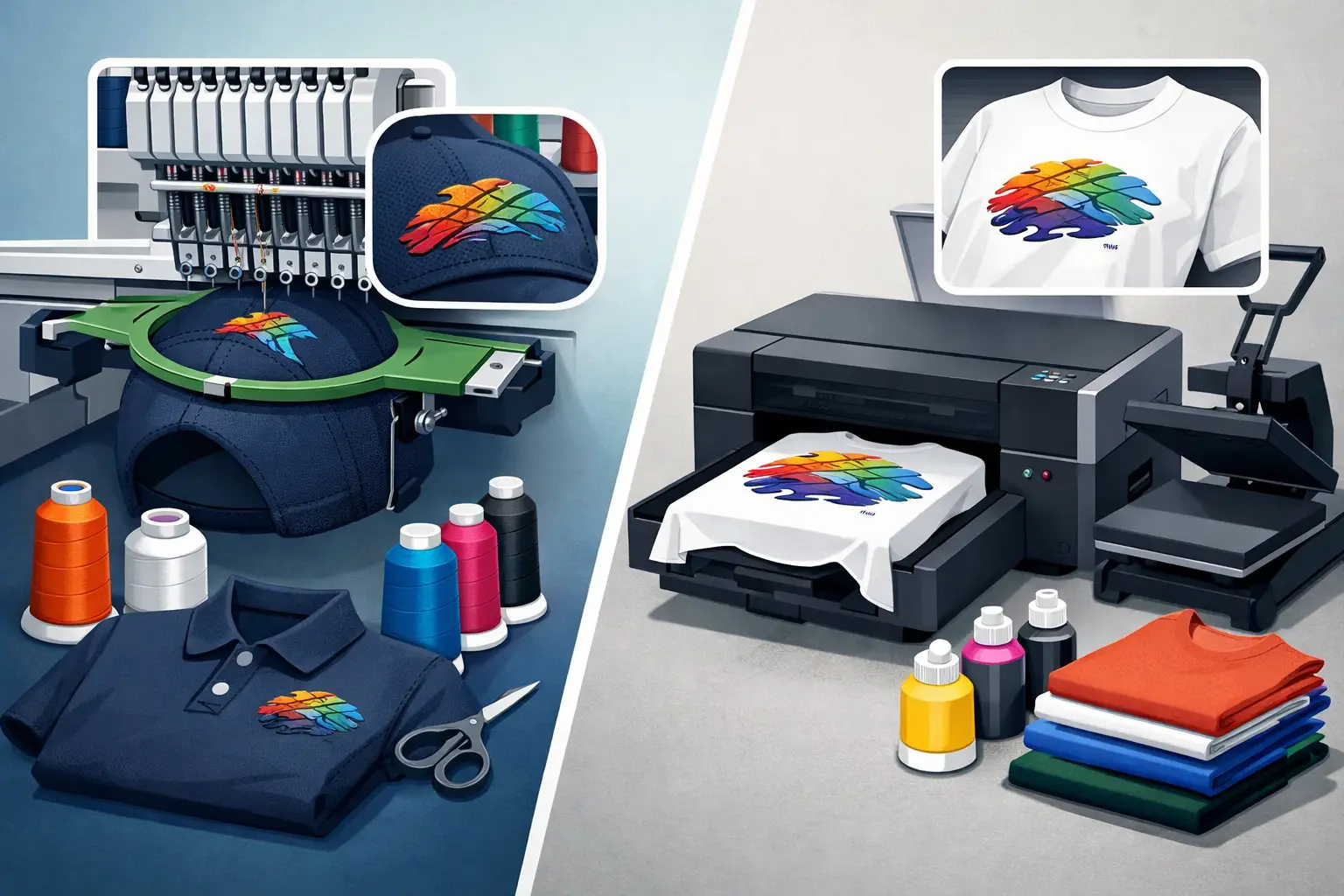
Embroidery creates a design by stitching colored thread directly into the garment. It produces a raised, textured finish that feels substantial and is closely associated with uniforms, professional apparel, and durable team gear. The artwork must be converted into a stitch file, which tells the embroidery machine where to place each stitch.
Direct to garment, often called DTG, prints water-based ink directly onto fabric. The process is much closer to placing a high-resolution image on a shirt than building a design with thread. It is especially useful for artwork with photographs, gradients, fine lines, and many colors.
Neither method wins in every situation. Embroidery emphasizes texture and long-term professional polish. DTG emphasizes visual detail, color range, and a softer printed feel when used on the right garment.
When Embroidery Is the Better Choice
Embroidery is usually the practical choice when a logo is simple, recognizable at a smaller size, and intended for left-chest placement. Think company polos, quarter-zips, work shirts, jackets, hats, and outerwear. A clean logo with a few solid colors often looks more refined in thread than it would as a print.
It also performs well for apparel that is worn frequently. A property management crew, city department, restaurant staff, or Johnson County service business may need branded apparel that holds up through regular use and laundering. Quality embroidery is durable, and its dimensional look gives employees a uniform appearance rather than the feel of a promotional T-shirt.
Fabric matters. Embroidery works on a broad range of apparel, including pique polos, performance polos, fleece, woven shirts, bags, caps, and heavier jackets. It is particularly effective on structured garments where the stitched logo can sit cleanly without pulling or puckering.
The trade-off is design complexity. Tiny lettering, very thin lines, subtle shading, and photographic images can become difficult to reproduce with thread. At small sizes, lettering may need to be enlarged or simplified so it remains readable. Thread colors are also matched from a defined palette, so the result can be very close to a brand color without always being an exact print-color match.
Embroidery can also feel heavier on lightweight fabric. On a thin performance shirt, a dense stitched design may require backing and can create a slightly firmer area inside the garment. That does not make it a poor choice, but it is a reason to match the decoration method to the garment rather than selecting each separately.
Best uses for embroidery
Embroidery is often the strongest fit for professional uniforms, executive apparel, staff recognition pieces, hospitality polos, golf events, workwear, caps, and outerwear. It is ideal when the logo is the main message and the garment needs a polished, consistent look over time.
When Direct to Garment Is the Better Choice
Direct to garment shines when the design itself carries the message. A school spirit shirt with a detailed mascot illustration, a nonprofit event shirt featuring sponsor artwork, or a company campaign with a full-color graphic can benefit from DTG’s ability to reproduce complex visuals.
Because DTG can print a wide range of colors without setting up a separate screen for every color, it is well suited to artwork with blends, shadows, detailed textures, or a large color palette. It can also reproduce intricate small details more naturally than embroidery, provided the artwork is prepared at the proper resolution.
DTG is most commonly used on cotton or cotton-rich garments. The ink bonds best with compatible fabrics, so garment selection is an important part of the conversation. Dark garments typically require a white underbase beneath the artwork, while light garments may print with a lighter, softer result. In either case, artwork and shirt color should be reviewed together before production.
For organizations ordering a limited run of shirts with individual designs, DTG can be an efficient option. A booster club may want one design for a tournament, a nonprofit may need shirts for a walk or volunteer day, or a business may need a small batch for an internal campaign. When artwork changes from one shirt to another, DTG gives greater flexibility than thread-based decoration.
The trade-off is that DTG is not intended for every apparel type. It is generally not the first choice for caps, structured outerwear, or traditional uniform polos. Its appearance and durability depend on compatible fabric, proper garment care, and a design that is prepared for the process. It also does not deliver the elevated texture many organizations expect for executive or customer-facing uniforms.
Best uses for direct to garment
DTG is a smart fit for detailed T-shirt graphics, event apparel, full-color illustrations, artist-style designs, school fundraisers, volunteer shirts, and short-run programs where visual complexity matters more than a textured logo finish.
Compare the Design Before Choosing the Process
The artwork is often the deciding factor. A bold one-color wordmark or compact logo may look excellent embroidered on a polo. A design with a watercolor background, small illustrated elements, or multiple color transitions will usually be better represented through DTG.
Size changes the answer, too. A small left-chest logo has limited space, making embroidery a natural option when the design is simple enough. A large back graphic or full-front event design gives DTG room to show its detail. A design that looks great at 10 inches wide may not translate effectively at 3 inches wide, regardless of decoration method.
Ask whether people should notice the garment’s finish first or the artwork first. Embroidery makes the finish part of the brand experience. DTG keeps attention on the image, message, or illustration.
Consider the Garment’s Job
A dependable apparel program starts by identifying how the item will be used. For employee uniforms, choose the method that supports comfort, repeat wear, and a consistent professional look. For spirit wear or a community event, choose the method that makes the design easy to see and enjoyable to wear after the event is over.
For example, a Kansas City contractor may use embroidered polos for office staff and embroidered jackets for field supervisors, while using DTG T-shirts for a recruiting event or safety campaign. A school may choose embroidered quarter-zips for faculty and DTG shirts for a homecoming theme. Keeping the logo and colors consistent across methods creates a coordinated program without forcing every item into one decoration style.
Garment care should also be considered. Embroidered apparel benefits from normal laundering practices that protect the threads and garment. DTG garments generally last best when washed inside out in cool water and dried with moderate heat. Providing simple care guidance is helpful for employee orders, online spirit wear programs, and event merchandise.
Budget, Quantity, and Timing Matter
Embroidery and DTG have different production considerations, so the most cost-effective choice can shift based on artwork and quantity. Embroidery pricing is often influenced by stitch count, placement, and the number of locations. A dense, detailed logo takes more machine time than a simple mark.
DTG pricing is influenced by print size, garment color, artwork coverage, and quantity. A full-color design may be practical for a smaller order because it does not require translating each color into thread. For larger apparel programs, the recommended approach should account for the final design, garment style, and delivery date rather than assuming one method is always less expensive.
Timing deserves attention, especially around school seasons, tournaments, trade shows, employee onboarding, and year-end recognition. Artwork approval, garment availability, digitizing for embroidery, and production schedules all affect turnaround. Bringing the project together early gives your team more garment and decoration options.
A Practical Way to Make the Decision
Start with four questions: Is the design simple or highly detailed? Is the garment a uniform piece or a graphic T-shirt? Will the logo be small on the chest or large across the garment? And how will the item be worn and washed?
If you are choosing between two good options, request a recommendation based on the actual artwork and apparel style. A production partner should flag small text that will not stitch well, fabric that is not suited to DTG, or a placement that needs adjustment before the order is finalized. That guidance protects both your budget and your brand.
The best decorated apparel feels intentional. Whether it is an embroidered polo for a new employee or a full-color DTG shirt for a community event, choose the process that gives the garment a clear job and gives people a reason to keep wearing it.