You do not want to order 100 polos or 300 event shirts and realize afterward that the decoration method was wrong for the job. That is usually where the screen printing vs embroidery question becomes real – not as a design debate, but as a budget, durability, and brand presentation decision.
For businesses, schools, teams, and organizations, the right choice depends on what you are decorating, how often it will be worn, and the impression you want to make. A staff polo for daily use has different demands than a fundraising T-shirt or a spirit wear order for a school event. After helping Kansas City area organizations with custom apparel for more than two decades, we can say the best answer is rarely one-size-fits-all.
Need Custom Printing or Promotional Products?
Zepher Printing helps Kansas City businesses, schools, teams, and organizations with custom apparel, screen printing, embroidery, promotional products, and branded merchandise.
Request a QuoteScreen Printing vs Embroidery: The Core Difference
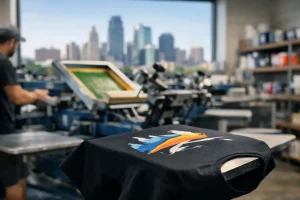
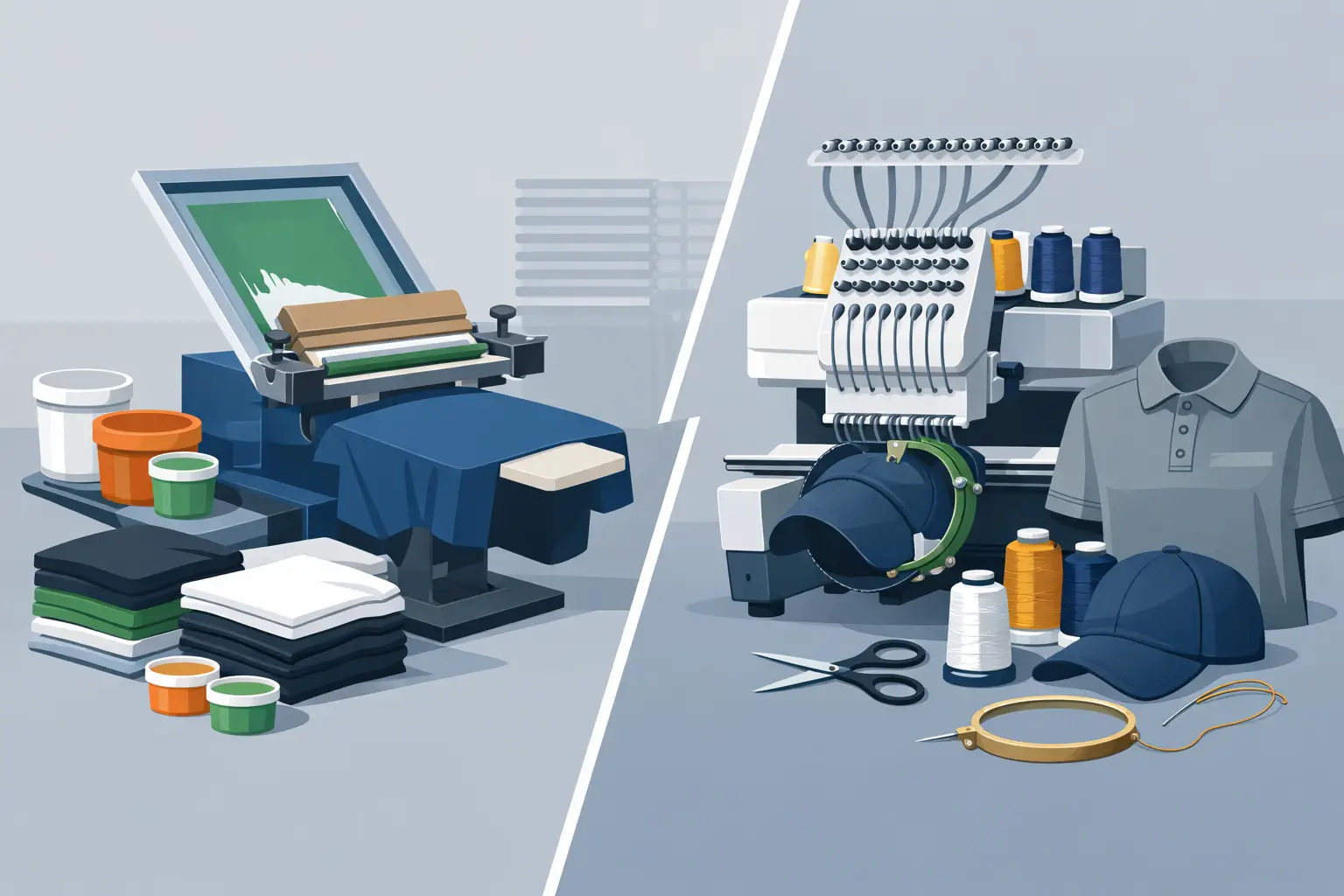
Screen printing applies ink directly onto the garment surface. It is often the better fit for T-shirts, hoodies, and high-quantity orders where bold graphics, large logos, or multi-color artwork need to look clean and consistent. The finish is smooth, flexible, and generally better suited to casual apparel and promotional wear.
Embroidery uses thread stitched into the fabric. That creates a textured, elevated look that feels more permanent and polished. It is a common choice for polos, jackets, hats, quarter-zips, bags, and uniforms where the goal is a professional appearance and long-term wear.
If you want a simple starting point, screen printing usually favors graphics and volume, while embroidery usually favors durability and a more upscale finish. But that is only the starting point, because fabric type, logo complexity, and garment use all matter.
When Screen Printing Makes More Sense
Screen printing tends to be the best choice when your design is larger, more colorful, or intended for lightweight apparel. It performs especially well on cotton T-shirts, blends, and fleece items used for events, staff shirts, school spirit wear, camps, and promotional programs.
For example, if a local nonprofit is ordering shirts for a 5K in Overland Park, screen printing is often the practical answer. Participants want a comfortable shirt, the artwork may include multiple colors or sponsor logos, and the budget usually matters. In that kind of order, embroidery would add cost without adding much value to the user experience.
Screen printing also handles larger front or back designs better than embroidery. A chest logo is one thing. A 10-inch-wide graphic across the back of a hoodie is another. Thread is not the right tool for every design, especially when the artwork depends on gradients, large fills, or fine illustrated detail.
Another advantage is consistency across larger runs. If a school, company, or event organizer needs a few hundred shirts, screen printing is often the more efficient route. That makes it a strong fit for onboarding apparel, volunteer shirts, fan gear, and campaign-style event merchandise.
When Embroidery Is the Better Choice
Embroidery works best when the apparel needs to feel durable, branded, and professional. It is a natural fit for employee uniforms, management apparel, outerwear, headwear, and items meant to represent the organization over time.
A Johnson County contractor outfitting office staff and field supervisors in polos and jackets will often lean toward embroidery because it communicates stability and professionalism. The stitched logo holds up well, looks sharp in client settings, and adds dimension that printed ink does not.
Embroidery also performs well on structured garments and thicker materials. Hats, fleece, bags, work shirts, and quarter-zips often benefit from stitched decoration because the fabric can support it. On those products, embroidery looks intentional. Screen printing can work on some of them, but it is not always the strongest visual or functional choice.
There is also a perception factor. Embroidered apparel often feels more like part of a uniform program and less like a promotional giveaway. If the apparel is tied to customer-facing roles, recruiting, staff retention, or executive branding, that difference matters.
Screen Printing vs Embroidery for Cost and Value
Cost is where many buyers start, but value is the better question.
Screen printing is often more economical for larger quantities, especially on T-shirts and similar garments. Once a design is set up, printing higher volumes tends to be efficient. That is one reason schools, event planners, and nonprofit organizations often choose it for big apparel runs.
Embroidery usually carries a higher per-piece cost because each item is stitched individually, and stitch count affects production time. For smaller logos on polos, hats, or jackets, that added cost often makes sense because the finished product lasts and presents well.
The better value depends on use. If the apparel is for one event weekend, screen printing often wins. If it is for employees wearing branded apparel several times a week, embroidery may deliver stronger long-term value even with a higher initial cost.
This is also where buyers sometimes make a costly mistake. They compare methods only by unit price and ignore garment purpose. Saving a few dollars per piece is not much of a win if the apparel does not match the audience or setting.
Design Limitations You Should Know
Not every logo works equally well with both methods.
Screen printing handles color better, especially when your artwork includes larger areas of ink, bold graphics, or designs that need visual impact from a distance. It is usually the stronger option for back prints, event artwork, and creative designs built around color.
Embroidery has limits when logos are very small, highly detailed, or dependent on tight gradients and thin lines. Thread has physical dimension, so some artwork needs to be simplified before it can stitch cleanly. That does not mean embroidered logos look worse. In many cases they look better. But they often need to be adapted to the method instead of copied directly from a digital file.
This matters for companies with detailed brand marks, schools with mascot artwork, or municipalities using official seals. A logo that looks great on paper may need adjustments on apparel, especially for left-chest embroidery.
Fabric, Feel, and Wear Matter More Than Most People Expect
The garment itself should influence the decoration method just as much as the artwork.
Lightweight tees usually pair well with screen printing because ink sits naturally on the fabric and keeps the shirt comfortable. Embroidery on thin shirts can pull or feel heavy depending on placement and garment quality.
Polos, jackets, and hats often pair better with embroidery because the structure of the garment supports stitching. A stitched logo on a quarter-zip or soft shell jacket usually feels more balanced than a printed one.
Durability also depends on use. Embroidery is known for holding up well over time, especially on workwear and uniforms. Screen printing can also be long-lasting when done correctly on the right garment, but heavy industrial washing, rough wear, and constant reuse can affect printed graphics differently than stitched ones.
If your team works outdoors, attends trade shows, staffs events, or interacts with the public daily, the way the garment wears over time should be part of the decision.
How to Choose the Right Option for Your Order
If you are deciding between the two, start with the role of the apparel. Ask whether it is meant to promote, identify, unify, or impress. Those are different jobs, and they often point to different decoration methods.
For promotional shirts, school spirit wear, fundraiser apparel, and event merchandise, screen printing is often the stronger fit. For uniforms, staff apparel, hats, outerwear, and client-facing gear, embroidery usually has the edge.
Then look at your artwork. Large, colorful, graphic-heavy designs tend to favor screen printing. Small chest logos and simple marks often favor embroidery. Finally, consider quantity and wear cycle. Big runs and budget-sensitive programs often point one direction. Long-term branded apparel programs often point the other.
In some cases, the best answer is both. A company may choose embroidered polos for office staff and screen printed T-shirts for warehouse crews or community events. A school might use embroidery for staff apparel and screen printing for spirit wear. The right mix depends on how each item is used, not on picking one method for everything.
The Best Choice Is the One That Fits the Job
The screen printing vs embroidery decision is really about matching the method to the moment. Good apparel should look right, feel right, and hold up the way your organization needs it to. If you start with the garment, the audience, and the purpose, the right answer usually becomes much clearer.
When buyers slow down long enough to make that match, the result is better-looking apparel, fewer surprises, and a brand that shows up the way it should.