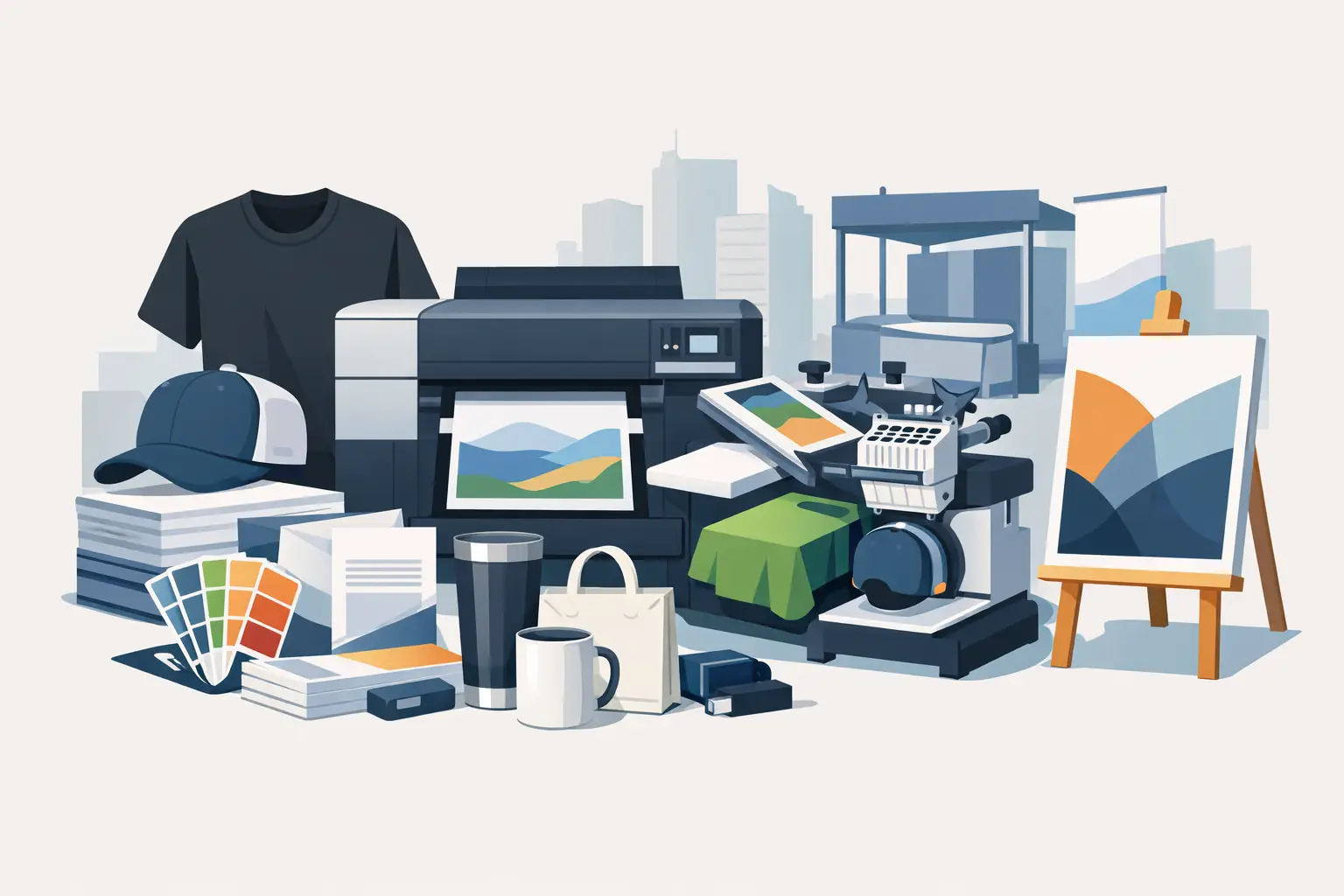
A business card handed over after a Johnson County networking event, a brochure picked up at a school open house, and a banner outside a weekend fundraiser all do the same job: they give people a physical reason to remember your organization. This guide to business printing materials will help you choose the right pieces for that job, without ordering items that look good in a box but never support a real goal.
For Kansas City businesses, schools, nonprofits, municipal departments, and athletic programs, printed materials work best when they are part of a connected brand experience. Your cards, forms, folders, signs, apparel, and event handouts should look like they came from the same organization and make the next step clear for the person receiving them.
Need Custom Printing or Promotional Products?
Zepher Printing helps Kansas City businesses, schools, teams, and organizations with custom apparel, screen printing, embroidery, promotional products, and branded merchandise.
Request a QuoteStart With the Job the Material Needs to Do
The first question is not, “What should we print?” It is, “What does this piece need someone to do?” A recruiting flyer has a different job than a trade show handout. A yard sign supporting a school activity has different requirements than a presentation folder for a professional services firm.
Define the audience, setting, and action before choosing paper, size, or finishing. If people will read the item while standing in a busy lobby, on a conference floor, or at a community event, the message needs to be brief and visual. If they will take it back to an office for consideration, more detail may make sense.
A useful way to organize business printing is by purpose:
- Everyday operations, including letterhead, envelopes, forms, notepads, and appointment cards
- Sales and relationship building, including business cards, brochures, presentation folders, postcards, and sell sheets
- Events and visibility, including banners, table covers, event signage, yard signs, decals, and directional signs
- Recruiting and employee engagement, including onboarding packets, recognition materials, training handouts, and branded apparel
The right mix depends on your organization. A growing Overland Park contractor may need durable yard signs, vehicle graphics, estimate folders, and employee uniforms. A nonprofit planning its annual gala may place more value on invitations, sponsor signage, programs, table materials, and donor follow-up cards.
Business Cards Still Set the Tone
Business cards remain one of the most efficient printed tools because they are personal, portable, and easy to keep. They are especially useful for sales teams, service technicians, school administrators, coaches, real estate professionals, and anyone who meets customers or community members face to face.
Standard cards are a practical choice for most organizations. A heavier stock can create a more substantial first impression, while a coated finish can help colors stand out. Uncoated stock is often easier to write on, which matters for appointment details, notes, or follow-up information.
Keep the design focused. Your logo, name, title, phone number, email address, website, and one clear brand message usually provide enough information. Trying to fit every service, credential, and social channel onto a small card often makes it less useful. If different teams need different information, create a consistent card template with role-specific details rather than designing each card from scratch.
Brochures, Sell Sheets, and Folders for Clearer Conversations
When your offering requires explanation, brochures and sell sheets give customers more context than a business card can provide. The best format depends on how much information is needed and how it will be shared.
A one-page sell sheet works well when a sales representative needs a fast leave-behind for one service, product line, program, or event. It should lead with the customer benefit, use easy-to-scan sections, and include a clear way to contact your organization. This is often the right choice for contractors, healthcare offices, manufacturers, professional firms, and organizations with a focused offer.
A folded brochure is better when the story has a few meaningful parts, such as service categories, program details, locations, or an overview of what sets your organization apart. Schools and nonprofits often use brochures for admissions, community outreach, donor information, or program education. Keep the reader’s path in mind: the cover should earn attention, inside panels should answer common questions, and the final panel should make the next step easy.
Presentation folders are valuable when your materials are handed out as a package. They help organize proposals, meeting documents, enrollment information, sponsorship packages, or recruiting materials. A folder also gives the recipient a useful item to keep, which can extend the life of your printed message.
Paper, Finishes, and Durability Matter
Paper choice affects how a piece feels, how colors reproduce, and whether it holds up in the field. Glossy coated paper can make photography and bright graphics more vivid, making it a strong option for promotional brochures, postcards, and event pieces. Matte finishes feel more subdued and are often easier to read under overhead lighting. Uncoated papers work well for stationery, forms, and materials that need signatures or handwritten notes.
Heavier paper is not automatically better. A thick stock can be appropriate for business cards, premium invitations, or postcards, but it can add bulk and cost to a large mailing or multi-page project. A lighter, well-chosen stock may be the more practical option for training manuals, newsletters, and high-volume handouts.
Finishing choices should solve a specific need. Lamination can improve durability for menus, reference cards, frequently handled signs, or materials used outdoors under cover. Rounded corners can make cards feel polished and reduce wear. Folding, binding, perforation, and variable data printing can turn a basic print order into a more functional tool. The key is to use these options with purpose, not simply because they are available.
Signage Must Work From a Distance
Signage has a short window to get noticed and understood. Whether it is displayed at a Kansas City trade show, outside a school gym, in a municipal building, or at a community race, people should be able to identify the main message quickly.
Prioritize three elements: a strong headline, readable contact or directional information, and brand visuals that remain clear at viewing distance. Small text, crowded sponsor logos, and low-contrast color combinations are common reasons signs fail to perform.
Material selection depends on where and how long the sign will be used. Retractable banners are convenient for events and presentations because they travel and set up easily. Vinyl banners are a practical option for larger, temporary displays. Yard signs work well for campaigns, real estate, school activities, construction sites, and directional needs. Rigid signs can provide more structure for longer-term placement.
Outdoor conditions, installation method, and expected lifespan should guide the recommendation. A sign that looks right for a one-day event may not be the right material for a season-long athletic program or recurring jobsite use.
Keep Brand Standards Consistent Across Every Piece
Consistency builds recognition. When your business cards use one logo version, your banner uses another, and your employee shirts use a third, people may not identify them as part of the same organization. This is a common challenge when materials are ordered at different times by different departments.
Establish a working set of brand standards before your next large print order. At minimum, define your approved logo files, brand colors, fonts, tagline usage, and preferred contact information format. You do not need a complicated brand book to create consistency, but you do need clear decisions that teams can follow.
Use the same core visual system across print, apparel, signage, and promotional products. A logo may need minor adjustments for embroidery, small-format printing, or one-color applications, but it should still feel recognizable. This is where working with one experienced local partner can reduce rework and help maintain quality across materials.
Plan Quantities and Timing Around Real Use
Ordering too few materials can create expensive rush requests. Ordering too many can leave you with outdated inventory after a phone number, staff member, offer, or logo changes. The practical answer is to estimate use based on actual activity rather than guesswork.
For recurring materials, review how many were used during the last quarter, season, event cycle, or hiring period. Allow room for growth, but avoid tying up your budget in years of supply unless the content is unlikely to change. For event materials, build in extras for damaged pieces, late registrations, walk-in attendees, and staff needs.
Timing also matters. Give your print partner enough lead time to review files, recommend materials, produce the order, and address any changes before your deadline. This is especially important before major Kansas City events, back-to-school periods, athletic seasons, fundraising campaigns, and trade show schedules.
A Better Guide to Business Printing Materials Starts With One Plan
The strongest print programs are not built from one-off orders. They begin with a clear picture of how people encounter your brand, from the first business card or postcard to the banner, uniform, brochure, or thank-you piece that follows.
Before placing your next order, gather the materials your organization already uses and look for gaps. You may find that a refreshed business card template, a more useful sell sheet, better event signage, or coordinated employee apparel would make your brand easier to recognize and easier to trust. At Zepher Printing, that practical, connected approach helps Kansas City organizations move faster while keeping their printed materials done right.