A new employee’s first morning often involves a laptop setup, a dozen new names, forms to complete, and a desk that does not yet feel like theirs. That is why asking what products work for onboarding is more useful than asking what giveaways to hand out. The best onboarding products solve small, immediate problems while making people feel expected, prepared, and part of the team.
For Kansas City businesses, schools, nonprofits, municipal departments, and athletic programs, an onboarding kit is a practical extension of the welcome experience. It should reflect the organization’s culture, fit the recipient’s workday, and be easy for your team to order and distribute. A crowded box of random items can miss the mark. A few well-chosen branded pieces can make a much stronger impression.
Need Custom Printing or Promotional Products?
Zepher Printing helps Kansas City businesses, schools, teams, and organizations with custom apparel, screen printing, embroidery, promotional products, and branded merchandise.
Request a QuoteWhat Products Work for Onboarding?
Products that people can use right away work best. Think apparel they will wear to a team event, a quality drinkware item that stays on their desk, and printed materials that answer the questions every new person has. The goal is not to put your logo on everything. It is to give a new hire, volunteer, student, or team member useful tools that reinforce belonging.
The right mix depends on the role, work environment, budget, and size of your program. A field technician has different needs than a new office coordinator. A high school coaching staff may need different gear than a nonprofit’s volunteer leaders. Start with the daily routine, then choose products that support it.
Start With the First-Week Experience
Before selecting products, consider what the recipient will do during their first five workdays. Will they meet customers? Work at a desk? Attend training sessions? Travel between job sites? Represent the organization at an event? Those answers help separate useful products from items that may never leave a drawer.
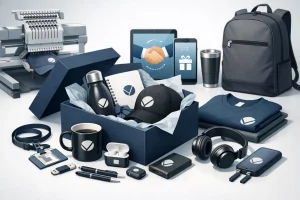
A strong onboarding kit usually has one item for identity, one for practical daily use, and one for information. Adding a fourth item is often enough when it serves a clear purpose, such as travel, safety, or a specific job function. This approach controls cost and keeps packing and distribution manageable.
Branded apparel creates visible belonging
A comfortable, well-fitting branded shirt is often the anchor of an onboarding kit. Polos work well for customer-facing teams, municipal staff, and professional office environments. Soft tees can be a better match for casual workplaces, school clubs, athletic programs, volunteer groups, and event teams. Quarter-zips, lightweight jackets, and vests add value for employees who spend time outdoors or move between locations.
Fit and quality matter. Apparel that feels good is more likely to be worn beyond orientation, which gives your brand more visibility and gives the employee a stronger sense of connection. Offer a size collection process before the start date whenever possible. For larger organizations, keeping approved apparel options organized by department can also make reorders faster.
Drinkware and desk essentials earn repeat use
Reusable tumblers, insulated bottles, ceramic mugs, and travel mugs are reliable onboarding choices because they fit nearly every setting. They are useful on day one, easy to brand, and appropriate for employees, volunteers, board members, and interns. Choose a style that reflects how people work. A durable bottle may suit a parks department or field crew, while a clean insulated tumbler may fit a Johnson County office or financial services team.
For desk-based roles, consider a notebook paired with a quality pen, a mouse pad, or a small desk organizer. A notebook is especially useful during training because it gives new employees one place to capture processes, names, passwords, and questions. It also feels more intentional when paired with a printed welcome message instead of being handed out on its own.
Printed welcome materials make the kit useful
Printed materials are not the flashy part of onboarding, but they are often the most helpful. A welcome folder, orientation agenda, quick-reference guide, contact list, benefits overview, facility map, or first-week checklist gives new people confidence when they are processing a lot of information.
Keep these pieces clear and current. A thoughtfully designed folder can hold required forms and training materials without looking like a stack of paperwork. For schools and nonprofits, the same concept can support volunteer orientation, donor events, or seasonal staff training. If policies change regularly, use a shorter printed guide and reserve detailed information for your internal systems.
Bags make the package easier to carry and keep
A tote bag, backpack, drawstring bag, or laptop sleeve turns individual products into a true welcome kit. It also gives recipients something useful after orientation. Totes are a practical choice for event staff, community programs, and school groups. Backpacks and laptop bags are better suited to employees who commute, travel, or carry work materials between locations.
The trade-off is storage and budget. Bags take up more room than smaller promotional products, and premium styles can quickly raise the cost of a large rollout. They make the most sense when the recipient will genuinely use one or when the kit includes several materials that need a professional presentation.
Eight Smart Product Choices for Different Roles
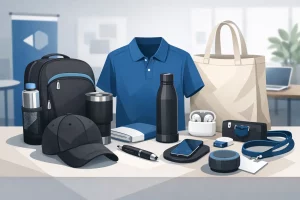
There is no single onboarding kit that fits every organization. These eight product categories cover the most common needs without adding unnecessary clutter:
- Branded polos, tees, or outerwear for team identity and customer-facing consistency.
- Insulated drinkware for a daily-use item with broad appeal.
- Notebooks and pens for training, meetings, and first-week note-taking.
- Welcome folders and printed checklists for clear, organized information.
- Tote bags, backpacks, or laptop sleeves for carrying materials and commuting.
- Badge holders, lanyards, or ID accessories for organizations with access credentials.
- Tech accessories, such as charging cables or webcam covers, for office and hybrid roles.
- Job-specific items, including safety gear, clipboards, or event credentials, when they support the work itself.
The last category deserves special attention. A branded clipboard may be more meaningful to an operations team than a novelty item. A quality name badge and polo may be more valuable to front-desk staff than a large gift box. For onboarding, relevance wins.
Adjust the Kit for Your Audience
For a growing business, a simple kit with a shirt, tumbler, notebook, and welcome folder can create a consistent experience across departments. It is easy to replenish and works well when new hires start throughout the year.
For schools and athletic programs, spirit wear, drawstring bags, water bottles, and team schedules may be the better fit. New coaches, student leaders, and seasonal staff need items that build school pride while helping them manage the activity in front of them.
Nonprofits can use onboarding products to connect volunteers and new staff to the mission. A branded tee, event tote, notebook, and concise orientation packet can make a volunteer feel prepared without spending heavily on products that do not serve the program. Municipalities and public-facing departments may prioritize durable apparel, identification accessories, safety-focused items, and practical drinkware for teams working in varied conditions.
Hybrid and remote employees require another layer of thought. Shipping a large kit can add expense and complexity, so select items that travel well and arrive ready to use. A branded quarter-zip, notebook, insulated tumbler, and a concise welcome card may be more effective than a bulky package. If remote staff will visit the office later, save certain location-specific materials for that first in-person day.
Keep Branding Consistent Without Making It Feel Promotional
Onboarding products should feel like part of the organization, not leftover trade show inventory. Use the same logo treatment, colors, and tone employees see on signage, business cards, uniforms, and internal materials. When apparel, print, and promotional products are planned together, the result feels more professional and is easier for your team to manage.
Avoid putting a large logo on every possible surface. A subtle mark on a premium tumbler or a well-designed notebook can feel more polished than oversized branding. This is particularly true for executive hires, professional services teams, and organizations that want their welcome kits to reflect a refined brand standard.
Plan for Reorders Before You Need Them
The strongest onboarding programs are repeatable. Document the approved products, decoration locations, sizes, and packing instructions so the next new hire receives the same quality experience. Keep a small supply of commonly used items on hand when hiring is frequent, but avoid stocking too much apparel if sizes or branding may change.
Working with one local partner for custom apparel, printed materials, signage, and promotional products can simplify this process. Zepher Printing has helped Kansas City organizations coordinate these pieces for more than two decades, with practical guidance on what fits the role, timeline, and brand.
A welcome kit will not replace thoughtful training or a manager who makes time for questions. It can, however, remove friction from the first day and send a clear message: you planned for this person’s arrival, and they have a place on the team.