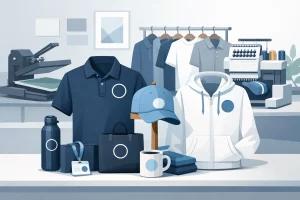
A company store should make branded purchasing easier, not create another task for HR, marketing, or operations. Knowing how to launch a company store starts with a simple question: what does your organization need people to order, and who needs access? When the answers are clear, an online store can keep uniforms consistent, simplify onboarding, support events, and give employees a dependable way to represent your brand.
For Kansas City businesses, schools, nonprofits, and athletic programs, the best stores solve a real ordering problem. They do not attempt to display every possible item or require a committee meeting for every polo, hoodie, and giveaway. They give the right people an approved selection, a clear ordering process, and products they will actually want to wear or use.
Need Custom Printing or Promotional Products?
Zepher Printing helps Kansas City businesses, schools, teams, and organizations with custom apparel, screen printing, embroidery, promotional products, and branded merchandise.
Request a QuoteStart With the Job Your Company Store Must Do
A company store can serve several purposes, but it needs a primary role. A growing business may need an easy way to outfit new hires. A multi-location organization may want a consistent uniform program. A school may need seasonal spirit wear ordering without collecting paper forms. A nonprofit may need event volunteers to order shirts by a deadline.
The purpose affects everything from the product lineup to fulfillment. For example, a uniform store may need year-round access, role-based apparel, and manager approval for certain items. A fundraiser or spirit wear store may work better as a limited-time campaign with a defined close date. Trying to make one store do both jobs can work, but only when the rules are clearly separated.
Before selecting products, identify who will shop, who will pay, and who will approve orders. Decide whether employees will purchase items themselves, receive a company allowance, or order through a manager. These details prevent the most common launch issue: a store that looks good but creates confusion as soon as the first order is placed.
How to Launch a Company Store With Clear Brand Standards
Your store is an extension of your brand. That means the apparel colors, logo placement, decoration method, and item quality need to match the way your organization wants to be seen.
Start by reviewing the assets that will appear on products. Use approved logo files and determine which versions belong on apparel, headwear, printed materials, or promotional products. A detailed logo may reproduce well on a banner but be too small for embroidery on a cap. A good store setup accounts for those differences before products go live.
Next, establish practical apparel standards. If your customer-facing staff wears navy polos, offer a focused group of approved navy options instead of 12 colors. If field crews need durable layers for Midwest weather, include moisture-wicking tees, work shirts, jackets, and headwear that fit the job. If office employees want branded apparel for casual days or recruiting events, consider polished quarter-zips, soft tees, and versatile outerwear.
Consistency matters, but so does choice. A store with only one shirt can feel restrictive. A store with too many nearly identical options makes decision-making harder and can weaken brand consistency. In most cases, a curated assortment gives employees enough flexibility without turning the store into a catalog.
Build a Product Mix Around Real Use
The right products depend on the setting, the season, and the audience. Think beyond what looks good in a mockup. Ask what people will wear repeatedly, what fits their work environment, and what supports the organization’s goals.
For a company uniform store, core options often include polos, performance shirts, button-downs, outerwear, hats, and name badges or printed business materials. A sales team may benefit from premium layers and trade show supplies. A school or athletic program may need spirit wear, team gear, yard signs, and event merchandise. Municipal departments often need durable workwear, safety-focused apparel, and clearly identified gear for public-facing teams.
Product quality should match the intended use. A low-cost tee may be the right choice for a one-day volunteer event, while a durable embroidered jacket is more appropriate for employees who meet customers every day. There is no single best product tier. The right choice depends on how often the item will be used, who will wear it, and the impression it needs to make.
Avoid launching with products that have not been considered from an operational standpoint. Check available sizes, expected lead times, decoration compatibility, and whether a garment is likely to be reordered later. Replacing a popular item six months after launch is manageable, but planning for continuity from the start is better.
Set Ordering Rules Before Opening the Store
The strongest company stores make ordering feel simple because the rules were handled behind the scenes. Determine who can access the store, whether ordering requires a password, and which products are available to each group.
You may want every employee to see general branded apparel while limiting specialized uniforms to specific departments. You may also want managers to approve orders that use a company budget. These controls are especially useful for organizations with multiple locations, cost centers, or employee roles.
Set expectations for payment and shipping as well. Some organizations ship directly to each employee’s home, which works well for distributed teams. Others prefer bulk delivery to an office, school, or department to reduce individual shipping and simplify distribution. For local organizations in Overland Park, Johnson County, and the broader Kansas City metro, centralized delivery can be particularly helpful when a coordinator already distributes uniforms or event materials.
Make return and exchange expectations clear, especially for decorated apparel. Sizing is one of the few areas where a little preparation saves significant time later. Include size charts, encourage employees to check measurements, and consider sample sizing when uniforms are a major part of the program.
Create an Approval Process That Does Not Slow Everything Down
An approval process should protect budgets and brand standards without making every purchase feel like paperwork. The best approach is usually based on the type of order.
Routine employee purchases from a preapproved collection may not need review. Higher-value outerwear, department-specific items, or orders tied to a company allowance may require manager approval. Event products and new logo applications should have a designated decision-maker before the store is promoted.
Choose one or two people who can make timely decisions about artwork, product substitutions, and exceptions. When too many stakeholders are involved, small questions can delay an entire program. This is common with school groups, nonprofits, and organizations planning large events, where several well-meaning volunteers may all have different preferences.
Document the process in plain language. Shoppers should know whether their order is approved automatically, who reviews it if needed, and when they can expect it. Administrators should know who handles questions about budgets, sizes, or product changes.
Plan the Launch Like an Internal Campaign
A company store is not fully launched when the website is live. It is launched when the intended audience knows why it exists and how to use it.
Announce the store with a short, practical message. Explain who it is for, what people can order, whether there is an ordering deadline, and how products will be delivered. If there is an employee allowance or onboarding requirement, state that clearly. For a seasonal spirit wear store, lead with the order deadline and the delivery timing. For an ongoing employee store, focus on convenience and approved brand options.
A small launch incentive can help create early participation, but it is not always necessary. Sometimes the strongest reason to order is simply that the store solves a current need, such as a new uniform requirement, an upcoming trade show, or a fall athletics season. The message should match the reason the store was created.
Before making the announcement, test the shopper experience. Place a sample order, review product descriptions, verify logo appearance, and confirm notification emails go to the right contacts. It is much easier to correct a category name or a shipping instruction before a hundred people see it.
Measure What People Actually Use
After launch, review store activity instead of assuming the initial selection is correct forever. Look at which items are ordered most often, which sizes are frequently requested, and where shoppers ask questions. If a certain jacket consistently performs well, it may deserve additional color or logo options. If an item receives little interest, it may be unnecessary.
Feedback is especially valuable after the first ordering cycle. Ask a few managers, employees, coaches, or event coordinators whether the store was easy to use and whether the products met their needs. Keep the question focused. You are looking for useful adjustments, not an open-ended redesign.
At Zepher Printing, we have seen that a well-managed company store becomes more valuable over time. It can support new-hire kits, annual uniform refreshes, customer-facing apparel, staff recognition, event merchandise, and recruiting efforts without starting from scratch for each project.
Keep the Store Current Without Constant Rework
A store should be maintained, but it does not need to be rebuilt every month. Review it before major seasons, new school years, large events, or organizational changes. Add timely products when they serve a specific need, such as cold-weather layers before winter or event apparel before a community fundraiser.
Remove discontinued products promptly and communicate substitutions before they become a problem. If your brand changes, update the store early so old and new logos are not ordered side by side. These small maintenance steps preserve the consistency that made the store worthwhile in the first place.
The most effective company store is not the one with the most products. It is the one that gives your people an easy, reliable way to order approved branded items when they need them – fast, local, and done right.