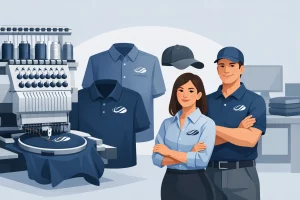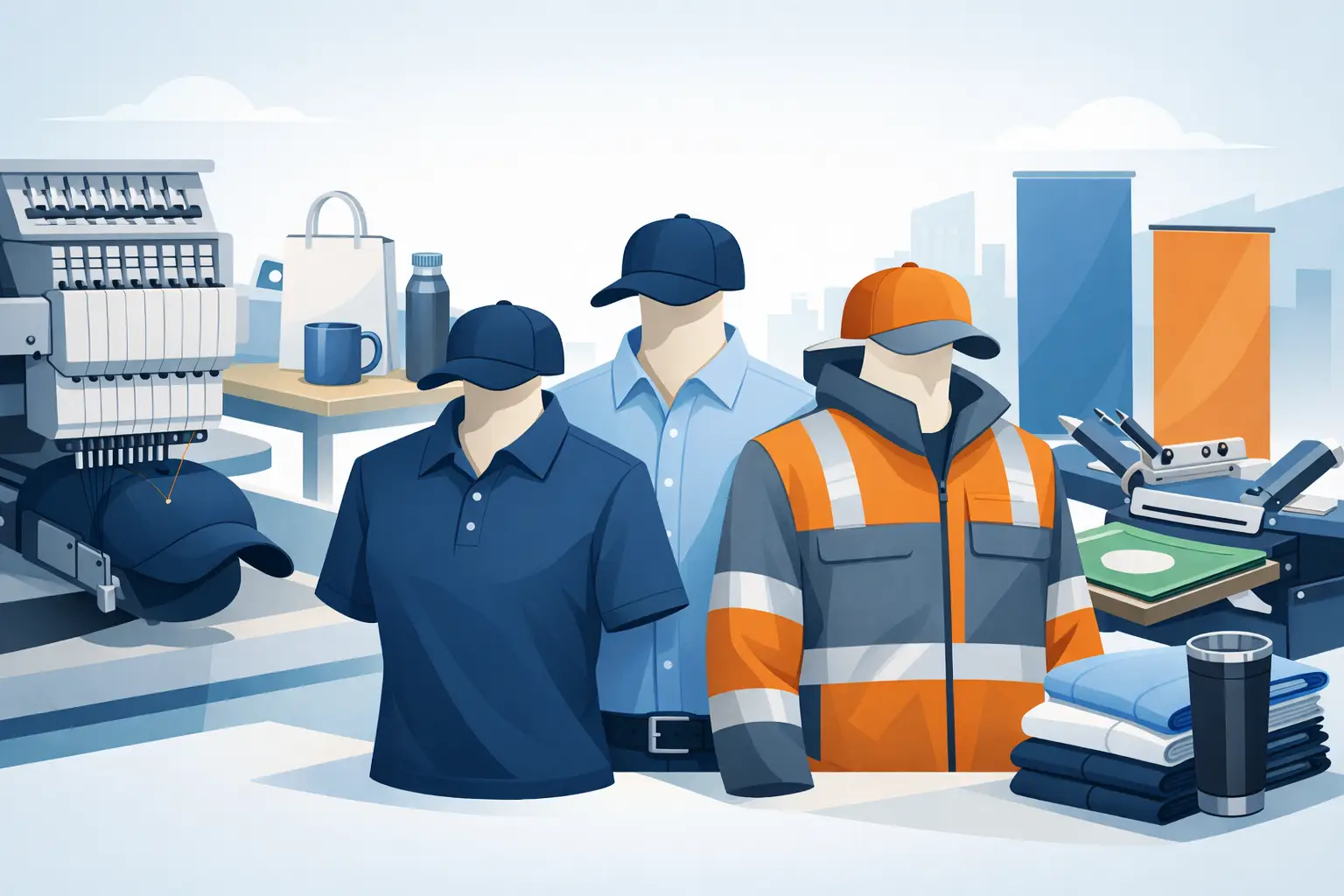
A service technician arrives at a Johnson County home, a restaurant team opens for a busy Friday night, or a school office welcomes families for an event. Before a word is spoken, company uniforms tell people who they are dealing with. The right apparel makes employees easy to identify, gives the organization a polished presence, and helps every customer interaction feel more consistent.
Uniform programs are not one-size-fits-all. A shirt that looks sharp behind a front desk may not hold up for a maintenance crew, while a heavy work jacket may be unnecessary for a small office team. The best choice balances brand appearance with the real conditions employees face every day.
Need Custom Printing or Promotional Products?
Zepher Printing helps Kansas City businesses, schools, teams, and organizations with custom apparel, screen printing, embroidery, promotional products, and branded merchandise.
Request a QuoteWhy Company Uniforms Matter Beyond Appearance
A uniform is a working part of your brand, not simply a shirt with a logo. It gives customers a visual cue that they have found the right person to ask for help. For businesses with technicians, drivers, event staff, sales teams, or customer-facing crews, that clarity builds confidence quickly.
Uniforms can also make the employee experience easier. New hires know what to wear, managers spend less time addressing inconsistent dress, and teams have a shared standard without losing all personal comfort. This matters in roles where staff represent the organization at job sites, school functions, community events, or customer locations throughout the Kansas City metro.
Consistency is particularly valuable when several departments or locations interact with the public. A recognizable color palette, logo placement, and garment style keep the organization looking connected, whether an employee is working in Overland Park, Olathe, or across town in Kansas City.
Start With the Job, Not the Garment Catalog
The most common mistake in choosing company uniforms is beginning with a favorite polo or a low per-piece price. Start instead with the work itself. Where will the garment be worn? How physical is the job? Will employees move between air-conditioned offices and outdoor locations? Does the apparel need to withstand frequent washing, exposure to dirt, or long shifts on their feet?
For office and client-service teams, polished polos, button-down shirts, quarter-zips, and branded layers often create the right balance of professional and approachable. For field crews, delivery teams, facilities staff, and skilled trades, durable work shirts, moisture-wicking tees, performance polos, outerwear, and high-visibility options may be more practical.
Seasonality deserves attention, too. Kansas City weather can change quickly, and a uniform program built around one short-sleeve shirt may leave teams underprepared. Offering a core shirt plus an optional sweatshirt, jacket, or vest gives employees useful layers while keeping the look consistent.
Before selecting styles, gather input from the people who will wear them. Managers can explain role requirements, but employees often identify practical details that affect adoption: pockets, fabric weight, sleeve length, fit, breathability, and ease of care. A uniform people do not want to wear will not deliver the consistency you intended.
Choose Fabrics That Fit Daily Demands
Fabric choice affects comfort, durability, decoration quality, and replacement costs. Cotton can feel familiar and breathable, making it a strong option for many casual teams and event shirts. However, it may shrink, wrinkle, or hold moisture more than a performance blend.
Polyester and moisture-wicking fabrics are often a better fit for active teams, outdoor work, and warm environments. They dry quickly and can help staff stay comfortable through long shifts. The trade-off is that decoration methods and garment quality matter more. Some lightweight performance fabrics are not ideal for every ink type, while very thin garments can show wear sooner than a heavier style.
Blends are popular because they combine softness with better shape retention and durability. For everyday uniform polos and tees, a cotton-poly blend can be an excellent middle ground. For tougher jobs, consider fabric weight, reinforced seams, stain resistance, and garment construction instead of focusing only on fiber content.
When in doubt, order samples or review comparable garments before committing to a large rollout. Seeing the fabric, testing the fit, and checking logo visibility under normal lighting can prevent an expensive mismatch.
Build a Uniform System, Not a Single Shirt
A strong program gives employees clear options within a controlled brand standard. That does not mean every person needs the identical garment. It means each approved piece looks like it belongs to the same organization.
Start with a simple core: one or two primary shirt styles, defined brand colors, and consistent logo placement. Then add role-based options as needed. A supervisor may wear an embroidered polo, for example, while warehouse staff wear screen-printed tees and drivers receive branded outerwear for colder months. The logo, color family, and overall level of professionalism should connect the pieces.
A practical program may include:
- Daily work shirts for each employee role
- Polos or button-downs for management and customer meetings
- Seasonal layers such as hoodies, quarter-zips, vests, or jackets
- Event apparel for trade shows, volunteer days, recruiting fairs, and community outreach
- Replacement and onboarding stock for new employees
This approach makes ordering easier as your team grows. Rather than starting over every time a new employee joins, you have approved styles, decoration details, and size information ready to use.
Get Logo Placement and Decoration Right
The size and placement of a logo change how a uniform is perceived. A left-chest logo is a familiar, professional choice for polos, button-downs, jackets, and many work shirts. A larger full-front or back print can provide better visibility for crews, events, and apparel worn at a distance.
Embroidery offers a durable, elevated look, especially on polos, outerwear, hats, and structured garments. It works well for smaller logos with clear shapes and limited detail. Screen printing is often the better choice for larger artwork, multi-shirt orders, or graphics with broad areas of color. It can also be more comfortable than embroidery on lightweight tees.
The right choice depends on the garment and the artwork. A highly detailed logo may need to be simplified for small embroidery. Conversely, a full-color graphic that looks great on a T-shirt may not translate well to a small left-chest location. Reviewing a proof before production is essential, but the planning stage is where a knowledgeable apparel partner can help flag issues early.
Keep placement consistent across garments wherever possible. If the logo moves from left chest to right chest to sleeve without a clear reason, the program can start to look improvised. Consistency is what turns separate pieces of apparel into recognizable company uniforms.
Plan for Sizing, Reorders, and Turnover
Uniform problems often appear after the first order, not before it. Employees need a comfortable range of sizes and fits. New hires need apparel quickly. Seasonal staff, replacements, and promotions can create last-minute needs. Planning for these realities saves time and avoids a patchwork look later.
Use a size collection process rather than guessing, especially for fitted apparel or outerwear. Include clear garment descriptions, available sizes, and fit guidance. If employees can try on samples, even better. A little coordination upfront can reduce exchanges and prevent unworn inventory.
For ongoing programs, keep a record of approved garment brands, colors, decoration locations, thread or ink colors, and artwork versions. This gives your organization a repeatable standard and helps ensure the next order matches the first. It also prevents outdated logos or off-brand colors from reappearing months later.
Consider how much inventory to keep on hand. Small organizations may prefer ordering as needed, while teams with frequent hiring may benefit from maintaining a limited supply of common sizes. There is a trade-off: stocked apparel offers speed, but too much inventory can tie up budget in sizes or styles that change.
Make the Rollout Feel Intentional
A uniform rollout is a chance to reinforce expectations and team pride. Explain why the apparel is changing, when it should be worn, how employees can request replacements, and which pieces are required versus optional. Clear guidance avoids confusion and helps the program start on the right foot.
For a new business, rebrand, or growing team, coordinate uniforms with business cards, signage, event materials, and promotional products. When employees, print materials, and physical spaces use the same visual language, customers receive a more credible and memorable impression.
For more than two decades, Zepher Printing has helped Kansas City area organizations bring those pieces together, from the first apparel recommendation through dependable reorders. The goal is not simply to put a logo on clothing. It is to create a uniform program your staff can wear comfortably and your organization can rely on shift after shift.
The best next step is simple: look at your current uniforms through your employees’ and customers’ eyes. If they are hard to identify, uncomfortable to wear, inconsistent between roles, or difficult to reorder, there is an opportunity to make every interaction look more organized and feel more professional.