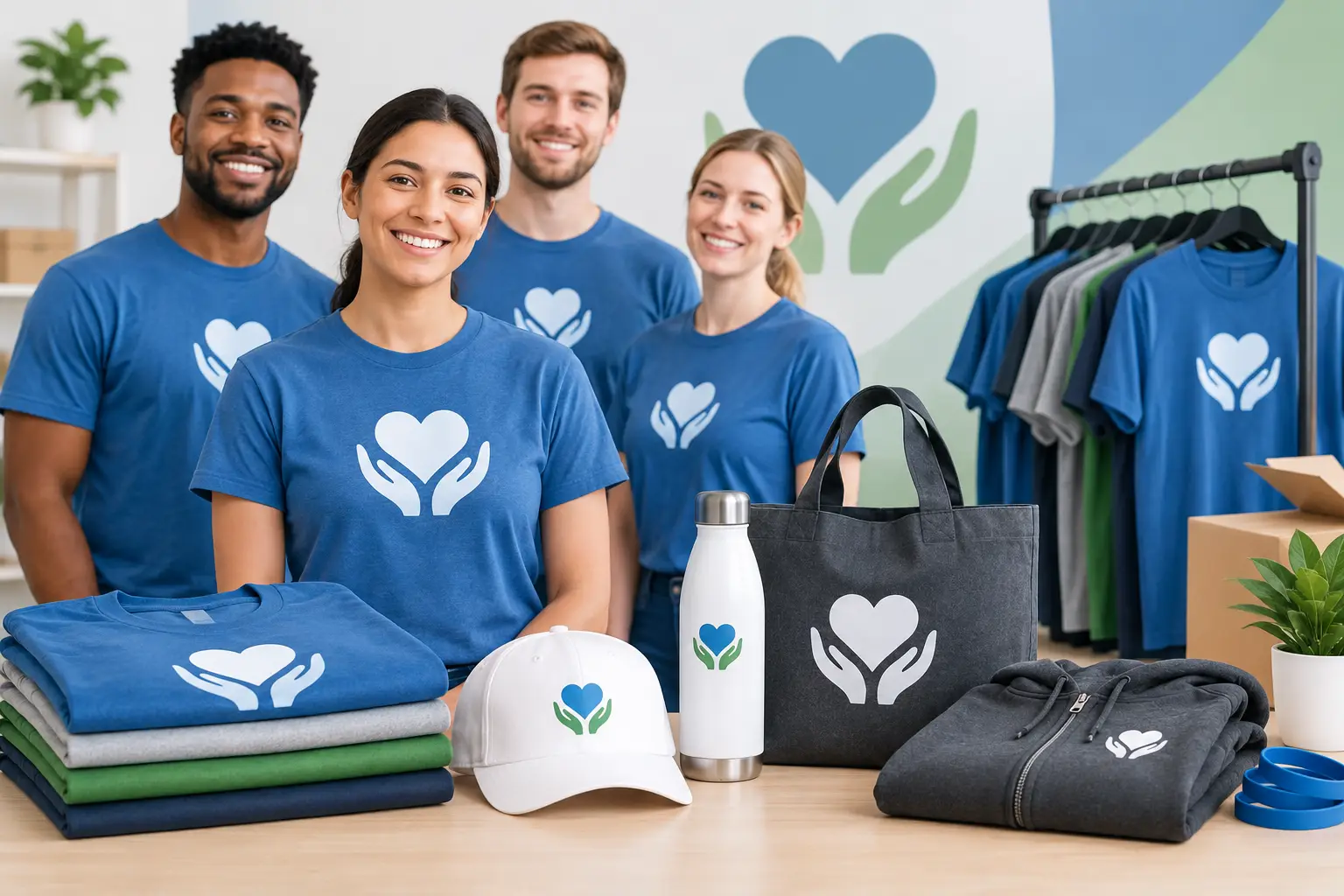
A volunteer shirt that is uncomfortable, hard to identify from across a parking lot, or delivered after the event does not help the mission. The best custom apparel for nonprofits does more than display a logo. It makes staff and volunteers recognizable, gives supporters a way to show pride, and creates a consistent presence at fundraisers, community events, and service projects.
For Kansas City area nonprofits, the right choice usually comes down to three practical questions: Who will wear it, where will they wear it, and what job should it do? A 5K participant shirt has different requirements than an embroidered polo for a development director or a high-visibility volunteer shirt for a neighborhood cleanup. Starting with the purpose keeps an apparel order focused and prevents wasted budget.
Need Custom Printing or Promotional Products?
Zepher Printing helps Kansas City businesses, schools, teams, and organizations with custom apparel, screen printing, embroidery, promotional products, and branded merchandise.
Request a QuoteStart With the Job the Apparel Needs to Do
Nonprofits often try to make one garment serve every audience and every occasion. That can work for a small event, but it is rarely the best long-term approach. Consider separating apparel into a few clear roles: volunteer identification, staff uniforms, donor or board gifts, fundraiser merchandise, and participant apparel.
Volunteer shirts should be easy to spot and easy to wear for a full shift. Bright colors, clear organization names, and a simple design are often more effective than a detailed graphic. At a busy event in Overland Park, Olathe, or downtown Kansas City, people need to find the right volunteer quickly. A bold logo on the front and a role identifier on the back, such as Event Staff or Information Team, can reduce confusion without adding unnecessary complexity.
Staff apparel should feel more polished. Embroidered polos, quarter-zips, button-downs, and lightweight jackets can create a professional look for outreach meetings, donor visits, school partnerships, or daily operations. The right garment depends on how formal the team needs to appear and whether employees work indoors, outdoors, or both.
Fundraiser merchandise has a different goal. It should be appealing enough that supporters want to purchase and wear it after the event. A well-designed T-shirt, crewneck, cap, or tote can carry a campaign beyond one night and keep the organization visible in the community.
Best Custom Apparel for Nonprofits by Use Case
The best products are not always the most expensive ones. They are the ones that fit the audience, environment, and expected wear. Here are dependable options for common nonprofit needs.
Event and Volunteer T-Shirts
Cotton or cotton-blend T-shirts remain a practical choice for walkathons, volunteer days, youth programs, food drives, and large community events. They are approachable, available in a broad range of colors and sizes, and work well with screen printing.
For one-day events, a standard cotton shirt may be exactly right. For an active outdoor event in Kansas heat, a moisture-wicking performance shirt may be worth the additional investment. It dries faster, feels lighter during long shifts, and is more likely to be worn again. The trade-off is cost, particularly when an event needs several hundred pieces.
Keep the design readable. A large, clean front graphic usually has more impact than several small messages competing for attention. If sponsor recognition is part of the event, reserve the back for sponsor logos and give the organization name prominence on the front.
Embroidered Polos and Layers for Staff
Polos are a strong choice for nonprofit leaders, office teams, program coordinators, and representatives working at public-facing events. Embroidery gives a logo a durable, professional finish and works especially well on polo shirts, jackets, fleeces, vests, and quarter-zips.
Choose fabric based on the workday. Cotton blends offer a familiar, comfortable feel. Performance polos are better for staff who move between sites, work outdoors, or support athletic and community events. Quarter-zips and lightweight jackets add flexibility during spring and fall in the Kansas City metro, when mornings and afternoons can feel like different seasons.
A subtle left-chest logo is usually enough. Apparel meant for daily wear should help employees look connected without making them feel like a walking billboard.
Fundraising Apparel Supporters Will Actually Wear
Fundraiser apparel works best when it feels like merchandise, not a leftover event shirt. Consider a softer retail-style T-shirt, a crewneck sweatshirt, a cap, or a tote bag with a design that supporters would choose on its own.
The message matters. A concise campaign name, meaningful local reference, or well-designed mission statement can be more wearable than a large formal logo. This does not mean removing the brand. It means balancing organization recognition with a design that fits everyday life.
Before ordering, be realistic about quantity. A limited run can create excitement and reduce leftover inventory, while a larger order may lower the per-piece cost. The better choice depends on how established the fundraiser is, whether apparel is included with registration, and how confidently the organization can estimate demand.
Youth Programs, Camps, and Team Apparel
For youth programs, camps, and recreational teams, durability and sizing deserve extra attention. Younger participants may wear their shirts hard, and organizers often need a broad size range that includes youth and adult options. Screen-printed shirts, hoodies, and performance apparel are dependable choices.
When multiple groups are involved, use color intentionally. Different shirt colors can distinguish age groups, teams, counselors, or volunteers without changing the core logo. This keeps the order organized and makes group management easier on event day.
Choose Decoration Based on the Garment and Design
Screen printing and embroidery each have a clear place in nonprofit apparel programs. Neither is automatically better.
Screen printing is typically well suited to T-shirts, hoodies, and event apparel, especially when ordering a larger quantity with a consistent design. It produces bold color and a clean look that is easy to recognize from a distance. The number of ink colors, print locations, garment material, and total quantity all affect the best production approach.
Embroidery is often the better fit for polos, hats, jackets, bags, and professional uniforms. It has a dimensional, durable appearance, but very small text and intricate artwork may need to be simplified. A logo that looks sharp on a brochure does not always translate cleanly to stitches.
This is where experienced artwork guidance saves time. Before production, review the logo size, placement, garment color, and decoration method together. A dark logo may disappear on a navy shirt, while a highly detailed mark may need a simplified version for a cap or left-chest embroidery.
Build a Budget That Covers the Full Need
Apparel budgets can get strained when organizations focus only on the base shirt price. The full order may include decoration, artwork preparation, individual names or roles, extended sizes, packaging, and delivery timing. Planning for these details early makes approvals easier and reduces last-minute changes.
A useful approach is to identify a good, better, and best option before presenting choices to a board or event committee. For example, a standard event tee may be the good option, a soft cotton blend the better option, and a moisture-wicking shirt the best option for an active outdoor audience. This gives decision-makers a clear view of the trade-offs rather than a single number without context.
It also helps to order with a small buffer for late registrations, new volunteers, and size exchanges. The right buffer depends on the event, but running short on common adult sizes can create more frustration than a modest amount of extra inventory.
Make Sizing and Ordering Easier on Your Team
Sizing is one of the most common sources of apparel headaches. Whenever possible, share garment measurements or fit samples before collecting sizes. A unisex shirt, a women’s cut, and a youth shirt may all be labeled similarly but fit very differently.
For organizations placing recurring orders, keep a record of previous garment styles, colors, decoration locations, and sizing patterns. That history helps when planning next year’s gala, annual volunteer day, summer camp, or staff refresh. It also helps maintain consistency as new employees and volunteers join.
Working with one local partner for apparel, event signage, printed materials, and promotional products can simplify coordination. Zepher Printing has seen that this is especially valuable when nonprofit teams are managing several moving pieces before a major event. Keeping colors, messaging, and deadlines aligned across materials creates a more professional experience for attendees and supporters.
Give the Design Room to Work
Nonprofit apparel often carries several messages at once: the organization logo, event title, sponsor recognition, volunteer roles, and a mission statement. Not all of them need to appear on the shirt. Apparel has limited space, and a crowded design can weaken every message.
Prioritize the element people should remember first. For a fundraiser, that may be the campaign name. For volunteer apparel, it may be the organization name and volunteer designation. For employee uniforms, it is usually the logo. Supporting details can live on event signage, registration materials, or a printed program where people have time to read them.
The strongest apparel programs are built for real use, not just for a proof on a screen. Choose garments people can move in, colors people can identify quickly, and decoration methods that fit the design. When each piece has a clear purpose, custom apparel becomes a practical extension of the mission and a visible reminder of the people who support it.