A crowded exhibit hall gives attendees dozens of reasons to keep walking. The right trade show promotional products give them a reason to pause, start a conversation, and remember your organization after the event. The wrong item becomes something they carry for an hour and discard at the hotel.
After more than two decades helping Kansas City organizations put their brands in people’s hands, we have seen a consistent pattern: the best giveaways are not always the least expensive or the flashiest. They are useful, aligned with the audience, easy to transport, and connected to a clear booth goal.
Need Custom Printing or Promotional Products?
Zepher Printing helps Kansas City businesses, schools, teams, and organizations with custom apparel, screen printing, embroidery, promotional products, and branded merchandise.
Request a QuoteStart With What You Need the Booth to Do
Before choosing a product, decide what success looks like. A recruiting event for a Johnson County employer has a different purpose than a nonprofit fundraiser, a school activities fair, or an industry convention where a sales team needs qualified appointments.
If your goal is broad visibility, choose a useful item that can be distributed in volume. If you need meaningful conversations with prospective clients, use a more valuable item as a thank-you for a scheduled demo, completed survey, or follow-up meeting. For employee recruiting, consider merchandise that helps candidates picture themselves as part of the organization, such as quality branded apparel or a practical desk item.
A giveaway should support the action you want attendees to take. It should not become the entire reason they visit your booth. When every person receives the same item without engaging with your team, you may create traffic but miss the opportunity to identify real prospects.
What Makes Trade Show Promotional Products Worth Keeping?
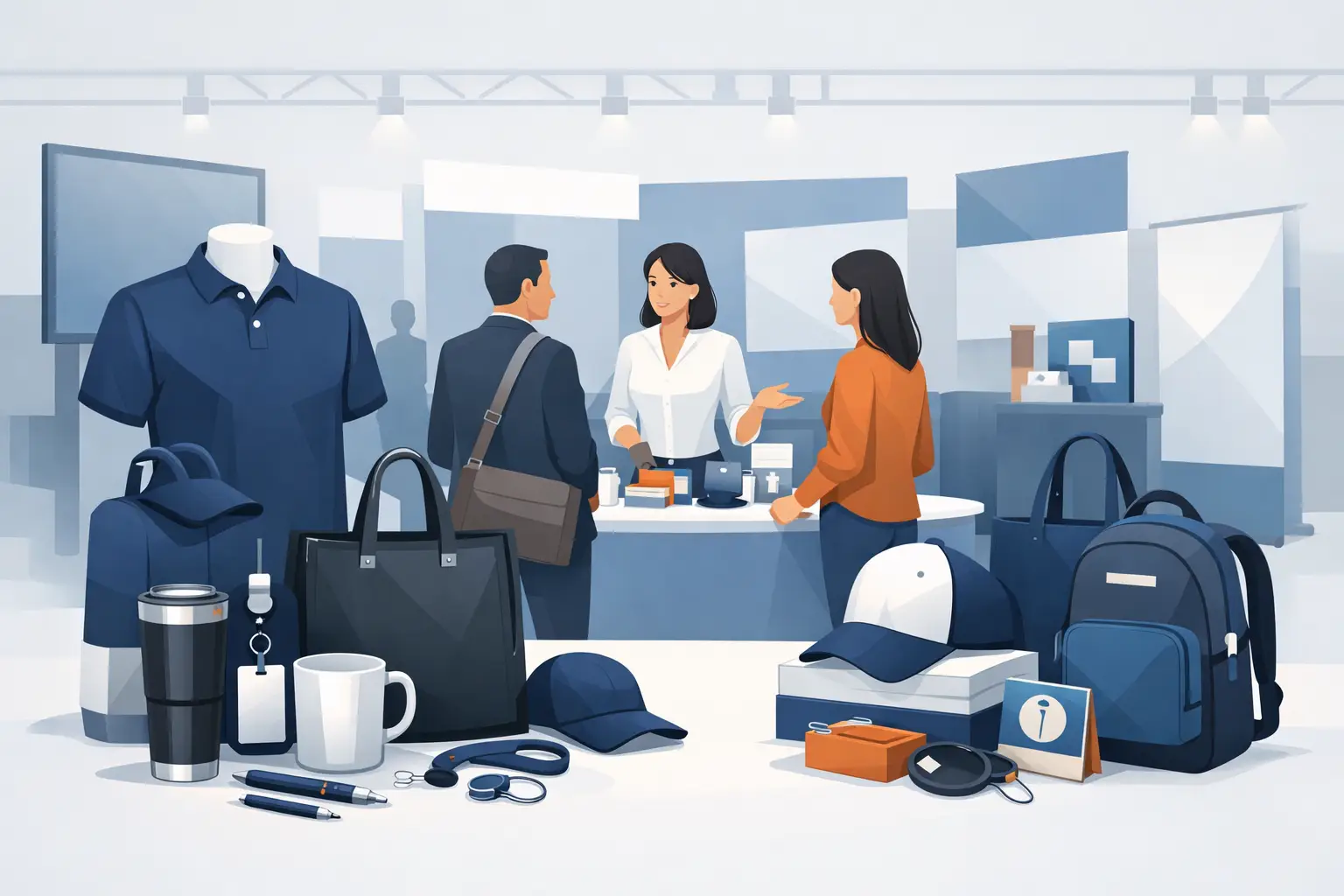
Usefulness wins because attendees are already carrying brochures, business cards, devices, and often a bag full of giveaways. Products that solve a small, immediate problem stand out. Think drinkware, charging accessories, notebooks, pens that write well, tote bags, lip balm, hand sanitizer, or compact travel items.
That does not mean every organization should order the same products. A construction supplier may get more value from durable work-oriented items. A financial firm may prefer a refined notebook and pen set for scheduled meetings. A youth sports program might make a stronger impression with spirit wear, rally towels, or team-color accessories.
Quality matters because the item represents your organization long after the show. A pen that fails, a logo that peels, or a bag with weak handles sends an unintended message. On the other hand, a well-made item used at a desk, in a car, or at a game can create repeat impressions for months.
Branding also needs room to work. Small products can be effective, but they may only accommodate a logo or short message. If your branding depends on a tagline, web address, event date, or several partner logos, choose an item with enough imprint area to stay readable. Trying to force too much information into a small space usually weakens the design.
Match the Giveaway to the Audience
The most successful trade show selections reflect how attendees actually live and work. A product chosen for a regional healthcare conference should feel different from one selected for a school open house or a municipal conference.
For business-to-business events, desk and workplace products often earn their place. Quality notebooks, mouse pads, drinkware, phone stands, and writing instruments remain visible during the workday. They are especially effective when your brand serves office teams, operations leaders, or purchasing professionals.
For outdoor events, athletic tournaments, community festivals, and school gatherings, focus on portability and immediate use. Water bottles, cooling towels, sunglasses, drawstring bags, and event shirts can fit naturally. In these settings, a strong color match to your organization or event identity can be just as important as the item itself.
Nonprofits frequently benefit from products that reinforce the mission without feeling overly promotional. A reusable tote, simple pin, or meaningful apparel item can give supporters a way to show affiliation beyond the event. The best choice depends on whether the organization is trying to raise awareness, encourage donations, recruit volunteers, or thank current supporters.
Build a Simple Giveaway Strategy
Not every visitor needs the same product. A layered approach helps protect your budget while giving your team a reason to move conversations forward. In many booths, it makes sense to use three levels: an easy-to-share item for general traffic, a better item for qualified conversations, and a premium gift for priority prospects, sponsors, or speakers.
For example, a visitor who stops for a quick introduction may receive a well-designed pen or small useful accessory. Someone who shares a genuine business need can receive a notebook, tumbler, or tote. A decision-maker who schedules a next meeting might receive a higher-value item that feels thoughtful and relevant.
The goal is not to make the booth feel guarded. It is to give your staff a natural structure for engagement. A simple line such as, “We have a few upgraded thank-you gifts for people who schedule a follow-up,” can create a clear next step without pressure.
Keep the giveaway display organized. If every item is spread across the table, attendees may grab what they want and leave before your team can connect. Place the primary giveaway where it is visible, while keeping premium items behind the table or available after a conversation.
Plan for Quantities, Timing, and Logistics
Quantity planning is one of the most common challenges. Ordering too few can leave your booth empty on the busiest day. Ordering too many can strain the budget and leave your team storing unused inventory.
Start with expected attendance, then estimate the percentage of people likely to pass your booth and engage. A high-traffic community event requires a different calculation than a targeted industry show with a smaller attendee list. Event organizers can often provide prior attendance information, booth maps, sponsor details, and audience profiles that make planning easier.
Also consider how items will travel. Bulky products may look appealing in a catalog but can be difficult for attendees to carry through a convention center or pack in luggage. They can also increase shipping, storage, and booth setup demands. If a larger item is a strong fit, reserve it for scheduled meetings or a post-event gift rather than general distribution.
Lead times deserve attention as well. Custom promotional products require time for product selection, artwork review, production, and delivery. Apparel, printed collateral, banners, table covers, and signage add more moving parts. Planning early gives you more product choices and time to review samples when needed. For Kansas City organizations working against a close event date, a local partner can help identify options that fit the timeline without making rushed decisions.
Make Your Booth and Merchandise Work Together
A giveaway is more memorable when it belongs to a complete event experience. Your table cover, retractable banners, printed handouts, staff apparel, name badges, and promotional products should look like they came from the same organization. Consistent colors, logo treatment, and messaging make a smaller booth feel more established and intentional.
Staff apparel is especially valuable. When attendees can quickly identify who represents your organization, conversations start more easily. Polos, embroidered button-downs, branded tees, or coordinated jackets can fit the tone of the event. The right choice depends on whether the atmosphere is formal, hands-on, athletic, or community-focused.
Avoid treating printed materials as an afterthought. A useful one-sheet, postcard, or brochure can answer the questions attendees may forget to ask at the booth. Pair it with a simple call to action, such as a meeting request, event offer, program application, or contact method. The promotional item creates a reminder; the printed piece gives that reminder context.
Follow Up While the Event Is Still Fresh
A branded giveaway does not replace follow-up. It supports it. The strongest results come from a timely, specific response after the event, especially for people who shared a challenge, requested information, or agreed to continue the conversation.
Have staff record a few useful notes with each lead: what the person needs, what caught their interest, and what should happen next. A generic message sent days later is easy to overlook. A short message that references the conversation and offers one clear next step is far more useful.
For local organizations, trade shows and community events can also create opportunities to build long-term relationships close to home. A thoughtful giveaway, clear branding, and dependable follow-up tell attendees that your organization is prepared, responsive, and easy to work with.
The best product is the one that fits your audience, your message, and the moment. When you plan the giveaway alongside your booth graphics, printed materials, and follow-up process, every item has a job to do – and your event investment has a better chance to keep working after the doors close.