A bowl of random pens at your booth rarely changes the outcome of a trade show. The giveaways that actually help start conversations, attract qualified visitors, and keep your brand visible after the event are usually planned with much more intention. If you’re figuring out how to plan trade show giveaways, the goal is not simply to hand out more items. It is to choose products that match your audience, your event goals, and your brand.
After helping organizations across the Kansas City area prepare for events, recruiting fairs, school functions, community expos, and industry trade shows, we have seen the same pattern again and again. The best giveaway strategy starts long before product selection. It starts with a clear answer to one question: what do you want this giveaway to do?
Need Custom Printing or Promotional Products?
Zepher Printing helps Kansas City businesses, schools, teams, and organizations with custom apparel, screen printing, embroidery, promotional products, and branded merchandise.
Request a QuoteStart with the job the giveaway needs to do
Some giveaways are meant to drive booth traffic. Others are meant to support lead generation, reinforce a product launch, thank existing customers, or help a recruiting team make a strong first impression. Those are very different jobs, and they should not all be solved with the same item.
If your team is exhibiting at a large regional expo, a lower-cost handout may make sense for broad visibility. If you are attending a targeted B2B event with fewer but more valuable conversations, a more thoughtful item can be the better investment. A municipality at a public outreach event, a school at an activities fair, and a manufacturer attending an industry conference all need different approaches.
When people skip this step, they usually end up choosing based on what looks popular in a catalog instead of what supports the event. That is when budgets get wasted on products that disappear into tote bags and never get used.
How to plan trade show giveaways around your audience
A useful giveaway feels relevant. That sounds obvious, but it is where many plans go off track.
Think about who will actually walk the floor. Are you trying to reach purchasing managers, school administrators, HR teams, job seekers, parents, coaches, or community members? The answer should shape not just the product, but also the quantity, imprint style, and message.
For example, if your audience is likely moving booth to booth with bags already full, compact items tend to perform better than bulky ones. If the event lasts all day, practical products people can use immediately, like drinkware, notebooks, or phone accessories, often create more engagement. If your audience includes families or students, the item may need broader appeal and a lower per-piece cost so you can order enough to meet demand.
There is also a difference between what people will accept and what they will keep. A giveaway only creates extended brand exposure if it makes it past the event and into someone’s desk, car, backpack, or daily routine.
Set a budget that accounts for the full event plan
One of the most common mistakes in planning trade show giveaways is spending too much of the event budget on the item itself and not enough on the full booth experience. Giveaways matter, but they are only one part of your presence.
Your budget should consider signage, printed materials, staff apparel, booth setup, and any pre-show or post-show outreach. A great giveaway cannot compensate for a booth that is hard to find, hard to understand, or hard to engage with.
It also helps to divide giveaway spending into tiers. Many exhibitors do better with a mix of products rather than one item for everyone. You might have an everyday handout for general traffic and a better item reserved for qualified conversations, demos, or scheduled meetings. That approach helps control costs while making your stronger prospects feel like they received something more intentional.
Lead times matter here too. Last-minute ordering usually reduces your options and can force compromises on product choice, imprint method, or quantity. Fast, local, and done right is always easier when the planning starts early.
Choose products people will actually use
The best trade show giveaways are practical, easy to carry, and aligned with the environment of the event. That does not mean every item needs to be flashy. In fact, some of the most effective products are simple items with strong everyday value.
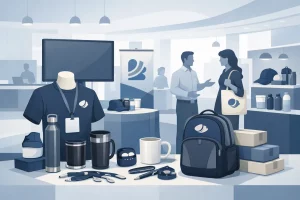
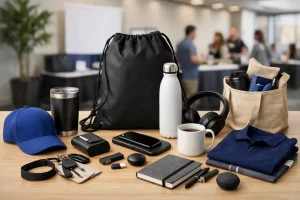
Drinkware, tote bags, notebooks, tech accessories, lip balm, hand sanitizer, and quality pens still have a place when selected thoughtfully. Apparel can also work well, but only when sizing, style, and event audience are considered carefully. A shirt can create strong brand visibility, but it also introduces more complexity than a one-size item.
Season and setting should influence your choice. An outdoor community event in the Kansas City summer calls for different thinking than an indoor convention center expo in January. A recruiting fair may benefit from products that feel useful to candidates right away, while a nonprofit event may call for giveaways that support awareness and goodwill without feeling overly promotional.
Good giveaway planning is often less about finding the newest trend and more about avoiding items that feel disposable. If the product breaks quickly, feels generic, or does not fit the event context, it can weaken your brand instead of helping it.
Branding matters more than people think
A useful item can still miss the mark if the branding is handled poorly. Oversized logos, cluttered messaging, or hard-to-read artwork can make even a quality product feel cheap.
Your imprint should be clean and intentional. In many cases, a simple logo treatment with strong contrast works better than trying to include too much information. Sometimes a short tagline or campaign message helps. Sometimes it does not. It depends on the size of the product and how the item will be used.
Color choice matters too. What looks great on screen may not perform the same way on fabric, drinkware, or specialty materials. That is one reason many organizations prefer to work with an experienced local partner who can help match the product to the branding instead of treating the order like a basic online transaction.
If your booth includes printed materials, table covers, signage, and staff apparel, your giveaways should feel like part of the same system. That consistency helps attendees remember you after the event.
Plan your quantities with more care than guesswork
Ordering too few giveaways creates stress during the event. Ordering too many can leave you with boxes of leftover items that were never the right fit.
The best estimate comes from looking at expected attendance, booth traffic goals, event length, and how selectively the item will be distributed. If you are at a major expo with heavy traffic, a broad handout may need larger quantities. If the giveaway is tied to a demo, a badge scan, or a scheduled conversation, your quantity can be much tighter.
Past event history helps when you have it. If not, ask practical questions. How many staff members will be working the booth? How many meaningful conversations can they realistically have? Is the giveaway available to everyone or only to certain visitors? Those details make planning more accurate.
It is also smart to reserve a small portion of your order for follow-up. A giveaway can continue working after the show if you use it in thank-you packages, sales visits, onboarding kits, or post-event outreach.
Use giveaways to support conversation, not replace it
The strongest booth results usually come from interaction, not freebies alone. A giveaway should give people a reason to stop, stay, or remember you. It should not do all the work.
That is why distribution strategy matters. Sometimes it makes sense to place the item visibly to draw attention. Other times, especially with higher-value products, it is better to give the item after a conversation. This creates a more deliberate exchange and helps your team focus on qualified engagement instead of just foot traffic.
You can also tie giveaways to simple actions such as a product demo, a quick survey, a meeting request, or a recruiting conversation. The right approach depends on your audience. A public event may need a more open and welcoming style, while a business trade show may benefit from a more selective approach.
How to plan trade show giveaways with follow-up in mind
A giveaway should not be treated as the final touch. It should support what happens next.
Before the event, decide how your team will connect the giveaway to lead tracking and follow-up. If someone takes a premium item, what information are you collecting? If your goal is recruiting, how will you continue the conversation afterward? If your team is meeting current clients at the event, can the giveaway help reinforce appreciation and retention?
This is where planning pays off. A well-chosen product keeps your brand visible after the booth is packed up, but only if your follow-up process is ready to build on that visibility. The item keeps the reminder alive. Your team still needs to carry the relationship forward.
For many organizations, the most effective giveaways are not the most expensive ones. They are the ones that fit the audience, support the event goal, and show up as part of a coordinated brand experience. That is the difference between handing something out and making it count.
If you are planning for an upcoming show, start earlier than you think you need to. Better choices, better branding, and better event results usually come from giving the details enough time to come together.