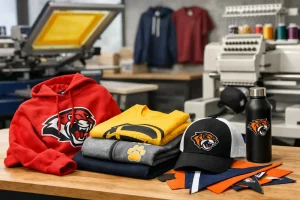
A robotics team arriving at a competition in matching shirts looks prepared before the first robot moves. A debate club wearing its design at a tournament is easier to spot, support, and remember. Well-planned school club shirts do more than identify a group. They give students a visible connection to something they chose to join.
For advisors, coaches, activity directors, and parent volunteers, the challenge is making that connection without creating an order that is too expensive, late, uncomfortable, or difficult to manage. The best results come from deciding what the shirts need to accomplish before choosing colors, artwork, or garments.
Need Custom Printing or Promotional Products?
Zepher Printing helps Kansas City businesses, schools, teams, and organizations with custom apparel, screen printing, embroidery, promotional products, and branded merchandise.
Request a QuoteStart With the Club’s Real Purpose
A club shirt can serve several jobs at once, but one purpose should lead the decision. Is the shirt primarily for weekly meetings, a one-day event, fundraising, recruitment, travel, or school spirit? A shirt for a volunteer service day may need to be highly visible and durable. A literary magazine staff shirt may call for a softer garment and a more understated design. A competitive club may need a consistent look that works across multiple events during the school year.
This matters because a shirt designed only for the lowest initial cost often ends up staying in a drawer. A shirt designed only for appearance can become difficult to print, reorder, or fit into a student budget. The practical middle ground is a garment students will genuinely wear, paired with artwork that is clear at a glance.
For many Kansas City-area schools, club apparel also needs to work beyond campus. Students wear it at community events, district competitions, restaurants after activities, and weekend fundraisers. That extra visibility makes thoughtful branding worthwhile.
Keep the Design Easy to Read
A strong design is usually simpler than the first draft. Put the club name, school name or mascot when appropriate, and a clear visual element at the center of the concept. If an audience cannot identify the club from several feet away, the design may be doing too much.
Start with one strong front design. A left-chest print works well for polished, everyday apparel, while a full front graphic makes more sense for spirit-focused groups and special events. Back prints can add names, sponsors, event details, or a larger graphic, but they also add cost and can make the shirt feel overly busy.
Color count is another useful decision point. Fewer ink colors can help keep screen-printed shirts affordable and produce a bold, clean result. That does not mean every design must be limited to one color. It means each color should have a job. School colors, for example, often provide enough visual energy without adding unnecessary complexity.
Before approving artwork, view it at actual shirt size. Fine lines, tiny type, and subtle color changes may look good on a computer screen but disappear in print. This is especially true when a design includes a detailed club logo or a student-created illustration.
Choose a Garment Students Will Want to Wear
The blank shirt is part of the message. A heavyweight cotton tee can be a dependable option for a service project or outdoor event. A softer cotton blend may be a better choice for clubs hoping students will wear the shirt long after the first event. Performance fabrics are useful for active groups, but they may require a different decoration approach than standard cotton shirts.
There is no single best garment for every club. Consider the season, activity level, age group, expected number of wears, and budget. A middle school art club ordering shirts for a spring festival may prioritize color and affordability. A high school leadership group traveling to conferences may choose a more polished polo, quarter-zip, or lightweight hoodie.
Color deserves the same attention as fabric. Dark garments hide stains and work well for dramatic light-colored prints. Light shirts can feel more casual and may be cooler for outdoor events. If the club expects to add new members later, select a garment style and color that are likely to remain available or can be matched closely on a future order.
Sizing is where many otherwise good orders become frustrating. Collect sizes through a simple deadline-based form and include adult sizing details, not just labels such as small or large. If the club is ordering extras for new members, volunteers, or last-minute participants, a small mix of common sizes is usually more useful than ordering several extras in only one size.
Build an Order That Is Easy to Manage
The most successful school club shirt orders have one designated decision-maker, even when several people contribute. That person does not need to make every creative choice. They do need to confirm the final design, garment, quantities, sizes, and delivery date so the project does not stall in a long chain of approvals.
Set the in-hand date first, then work backward. Factor in time to gather sizes, finalize artwork, collect payments if needed, approve a proof, produce the order, and distribute shirts. School calendars fill quickly around homecoming, testing, tournaments, concerts, and end-of-year events. An order that begins early has more flexibility in garment selection and production scheduling.
When a club has a limited budget, consider whether one standard shirt is more effective than multiple garment options. Too many choices can create sizing errors, delayed payments, and extra administrative work. On the other hand, offering a basic tee alongside an optional hoodie can make sense for an established club with strong participation and a longer ordering window.
For fundraising apparel, be clear about the goal. If the objective is participation and visibility, keep the ordering process simple and the design broadly appealing. If the objective is raising funds, build the timeline around preorders so the club can order closer to actual demand. Both approaches can work, but they should not be mixed without a plan.
Match the Print Method to the Project
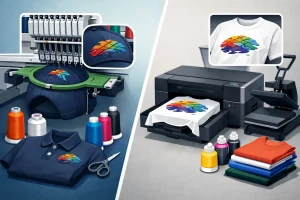
Screen printing is a practical choice for many school club shirts, particularly when the design will be repeated across a larger quantity of shirts. It creates a durable, consistent finish and works well with bold artwork. For smaller orders, detailed graphics, or designs with many colors, other decoration options may be more suitable depending on the garment and artwork.
Embroidery can be a strong fit for polos, hats, jackets, and staff apparel, especially when a club wants a more professional appearance. It is less suited to large, intricate shirt graphics. The right method depends on the design, fabric, quantity, and intended use, which is why it helps to review the full project instead of choosing a print method in isolation.
A good production partner will ask practical questions: When do you need the shirts? Who will wear them? Will they be worn indoors, outdoors, or during athletic activity? Is this a one-time event or an item you will reorder? Those answers help avoid common mismatches, such as using a delicate design on a garment that will see heavy weekly wear.
Make Distribution Part of the Plan
Shirts have the most impact when students receive them before the moment they are needed. Delivering apparel the morning of an event creates unnecessary stress for advisors and students. Build in time for sorting, labeling, and handing out orders at a meeting or practice.
It also helps to give students a simple reason to wear the shirt again. Ask members to wear it for a recruitment day, a school assembly, a competition send-off, or a community service project. Repeated use turns an apparel order into a recognizable part of the club’s identity.
For clubs that order each year, save the approved artwork, garment details, ink colors, and size history. This makes the next order faster and helps maintain a consistent look as student leaders change. At Zepher Printing, we have seen that a little recordkeeping is often what turns a stressful first order into an easy annual tradition.
The right shirt gives students one more reason to show up, take pride in their group, and feel recognized. Start with the purpose, keep the design clear, and leave enough time to do the order right. That is how club apparel becomes something students are happy to wear well beyond the event calendar.