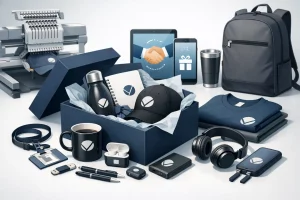
A new-hire welcome kit can set a tone before an employee attends their first meeting. A well-chosen quarter-zip, insulated tumbler, or quality notebook says, “We planned for you.” Branded merchandise for employee retention works best when it supports that kind of genuine experience – not when it is treated as a substitute for fair pay, capable leadership, or a healthy workplace.
For Kansas City organizations competing for dependable people, the details of belonging matter. Employees notice whether their equipment is ready, whether recognition feels personal, and whether the items carrying the company name are useful enough to earn a place in their daily routine. The right merchandise makes appreciation visible and reinforces that employees are part of a team worth representing.
Need Custom Printing or Promotional Products?
Zepher Printing helps Kansas City businesses, schools, teams, and organizations with custom apparel, screen printing, embroidery, promotional products, and branded merchandise.
Request a QuoteWhy Branded Merchandise Supports Retention
Retention is built over time through trust, growth opportunities, recognition, flexibility, compensation, and a work environment people want to return to. Promotional products cannot solve a culture problem. They can, however, make a strong culture more tangible.
A quality piece of branded apparel creates a shared, professional look at events, on job sites, in schools, or during community service days. A thoughtful anniversary gift gives managers a simple, repeatable way to recognize milestones. A useful onboarding kit removes small first-day friction while helping a new employee feel included sooner.
The practical value matters. Employees are more likely to keep and use items that fit their work and their lives: a reliable backpack for commuting, a soft hoodie for cool offices, a durable drinkware piece for travel between appointments, or a wireless charging pad for a desk. Every use becomes a quiet reminder of the organization’s investment in them.
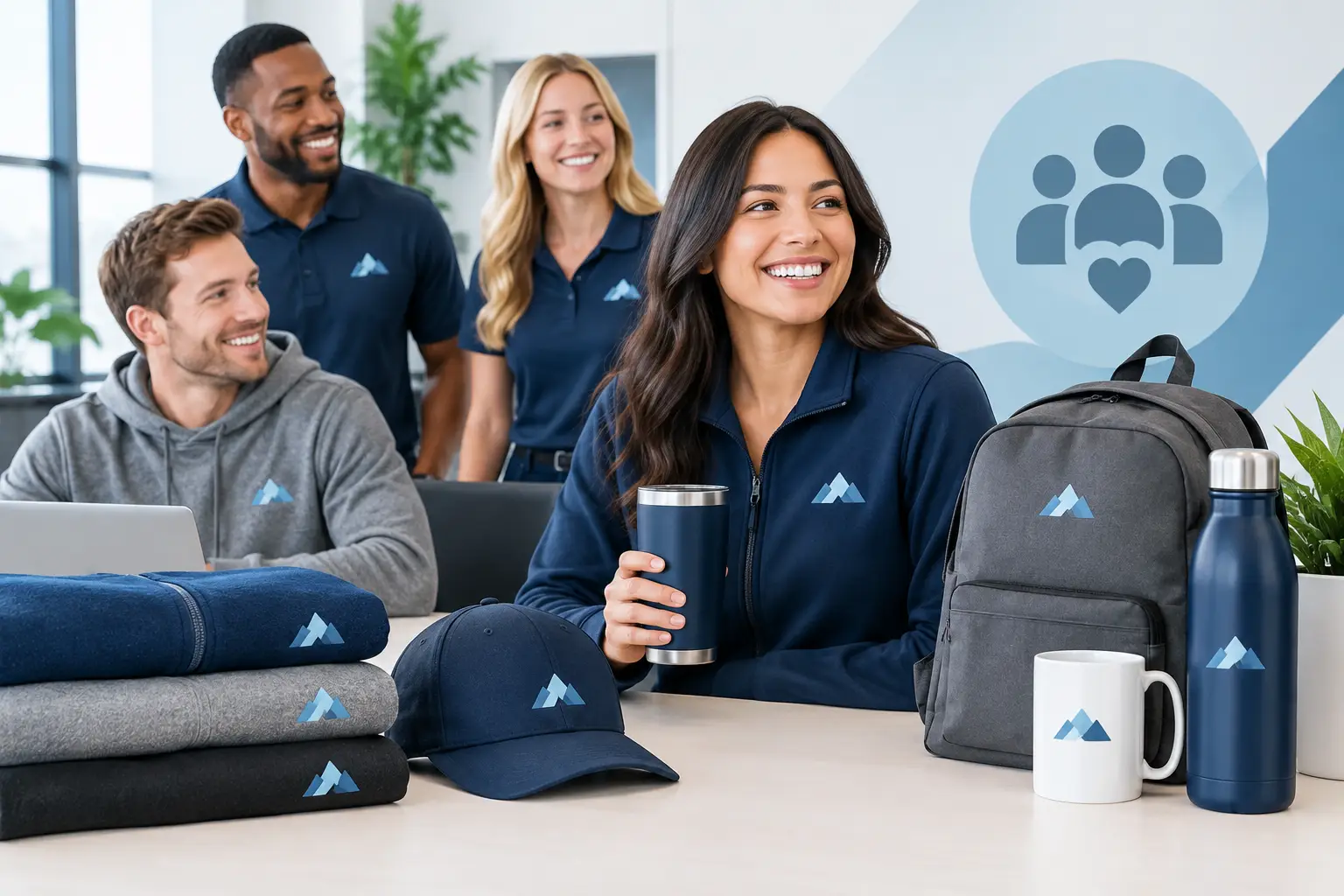
For organizations with dispersed teams, merchandise also helps bridge distance. A municipal department with field crews, a Johnson County business with hybrid staff, or a nonprofit coordinating volunteers across the metro can use coordinated apparel and recognition kits to create a stronger sense of connection.
Start With the Employee Moment, Not the Product
The most common mistake is ordering a popular item first and then searching for a reason to distribute it. A better approach is to identify the employee moment you want to improve. Is the goal to welcome new hires, celebrate years of service, support recruiting, recognize a demanding season, or build unity before a company event?
Each moment calls for a different product strategy. New-hire kits should be useful from day one. Include items that help employees work comfortably and understand the brand, such as a notebook, pen, badge accessory, drinkware, and apparel option. For employees working in the field, durability and safety may matter more than desk accessories. For an office team, premium apparel or a curated desk kit can feel more relevant.
Recognition deserves a higher level of thought. A five-year work anniversary should not feel identical to a trade show giveaway. The item does not need to be extravagant, but it should feel intentional. Better decoration, upgraded packaging, a personal message from a leader, or an employee’s choice of apparel size and style can change the experience significantly.
For seasonal appreciation, consider what employees will actually use after the event. A picnic blanket may be ideal for a family-oriented summer gathering. A heavyweight crewneck can be a welcome winter gift. The calendar, audience, and workplace should guide the decision.
Choosing Merchandise Employees Will Keep
Branded items create value only when employees want to use them. In more than two decades of helping local organizations with custom apparel and promotional products, one pattern remains consistent: utility and quality beat novelty.
Before choosing an item, evaluate four practical factors:
- Usefulness: Does it fit the employee’s workday, commute, hobbies, or home life?
- Quality: Will it perform well enough that employees reach for it again?
- Brand fit: Does the item and decoration reflect the organization’s standards?
- Distribution: Can you deliver it at a meaningful time without creating administrative headaches?
Apparel is often a strong choice because it combines usefulness with team identity, but it requires careful planning. Offer inclusive size ranges, choose fabrics appropriate for the work environment, and avoid overly large logos that make an item feel like a uniform when it is meant to be a gift. An embroidered polo may be right for a customer-facing team, while a soft screen-printed T-shirt or hoodie may get more wear from a school staff or athletic program.
Decoration method also matters. Embroidery creates a polished, durable appearance on polos, outerwear, and hats. Screen printing is effective for larger artwork and team apparel. A trusted print partner can recommend the method based on the garment, logo detail, order quantity, and intended use rather than steering every project toward one solution.
Make Onboarding Merchandise Feel Personal
A new employee’s first week is full of information, names, systems, and uncertainty. Branded merchandise can make that experience feel organized and welcoming when it arrives as part of a complete plan.
Start with the essentials. Make sure apparel sizes are confirmed before the start date. Include a branded item the employee can use immediately, plus printed materials that answer common questions or reinforce company values. If the role involves meeting customers, a polished shirt, name badge, business cards, and branded folder can help the employee feel ready to represent the organization.
Personalization creates an even stronger impression. Adding a first name to a notebook, apparel item, or welcome card is not always necessary, but it can be worthwhile for smaller teams or key hires. For larger organizations, a consistent kit that is packed accurately and delivered on time is often the greater priority.
The goal is not to overwhelm someone with branded objects. One or two excellent items paired with useful information will usually have more impact than a box full of low-value giveaways.
Recognition Programs Need Consistency
Merchandise is most effective when it is part of a consistent recognition rhythm. Employees should understand what milestones are celebrated and know that appreciation is not limited to the loudest achievements.
A simple program might recognize work anniversaries, safety milestones, exceptional customer feedback, project completions, or volunteer service. Managers should have a straightforward process for requesting approved items, and the organization should maintain brand standards so gifts feel connected rather than random.
Consistency does not mean every gift must be identical. A company can establish tiers based on tenure or accomplishment while allowing a choice among several products. Choice is particularly valuable for apparel because preferences around color, fit, and style vary widely.
Avoid turning recognition into logo distribution. Pair the item with specific appreciation: what the employee did, why it mattered, and how it helped the team or customer. The message gives the merchandise meaning. Without it, even a high-quality gift can feel transactional.
Plan for Budget, Storage, and Timing
An effective retention program is manageable, not complicated. Begin with an annual estimate of new hires, anniversaries, staff events, and recruiting needs. This gives purchasing, HR, and operations a clearer view of quantities and helps avoid rushed orders.
Some items are ideal to keep on hand, including common-size apparel, drinkware, notebooks, pens, and event shirts. Other items should be ordered for a specific occasion, especially premium gifts or products requiring individual names. The right mix depends on staff size, turnover, storage space, and how often designs change.
Timing deserves as much attention as the product. A welcome kit delivered two weeks after an employee starts loses much of its impact. A service award that arrives months after the milestone sends the wrong message. Working with one local source for branded apparel, print materials, signage, and promotional products can simplify coordination when several pieces need to arrive together.
For Kansas City employers, schools, nonprofits, and municipal teams, local guidance can also help account for real-world details such as event dates, seasonal weather, staff distribution, and the need for dependable turnaround. Zepher Printing helps organizations plan these projects so the finished pieces are practical, on-brand, and ready when they matter.
Measure What Employees Actually Value
Do not assume that the most expensive item was the most appreciated. Ask employees what they used, what they would choose again, and what they would skip. A short post-event survey or a conversation during a team meeting can provide useful direction for the next order.
Look for practical signals as well. Are employees wearing the apparel outside work? Do new hires mention their welcome kit? Are managers using recognition items consistently? Is there a pile of unused products in a supply closet? These observations can help refine the program without overcomplicating it.
Branded merchandise earns its place in an employee retention strategy when it feels useful, timely, and connected to real appreciation. Choose fewer, better items; deliver them at meaningful moments; and let the quality of the experience reflect the value you place on the people who keep your organization moving.