A generic gift card gets used. A thoughtful item gets remembered.
That difference is why custom employee recognition gifts matter more than many organizations expect. When recognition is handled well, the gift becomes more than a nice gesture. It reinforces culture, shows employees they are seen, and gives leadership a practical way to reward effort without sounding scripted or forced.
Need Custom Printing or Promotional Products?
Zepher Printing helps Kansas City businesses, schools, teams, and organizations with custom apparel, screen printing, embroidery, promotional products, and branded merchandise.
Request a QuoteFor companies, schools, nonprofits, municipalities, and teams across the Kansas City area, the challenge is usually not whether to recognize people. It is choosing something that feels personal, useful, and appropriate for the occasion. After years of helping organizations put branded products, apparel, and printed materials to work, we have seen the same pattern again and again – the best recognition gifts are the ones tied to the employee experience, not just the budget.
What makes custom employee recognition gifts effective
A good recognition gift does three jobs at once. It thanks the employee, reflects the organization, and feels worthwhile to keep.
That sounds simple, but not every product can pull it off. A low-quality item with a rushed logo can make the recognition feel like an afterthought. On the other hand, a well-chosen piece of apparel, drinkware, desk accessory, or award can carry real meaning, especially when it is paired with the right message and delivered at the right time.
Usefulness matters. So does presentation. An embroidered quarter-zip for a five-year work anniversary says something different than a printed tumbler handed out at a staff appreciation lunch. Neither is automatically better. It depends on the moment, the audience, and the culture of the organization.
The most effective gifts usually have at least two of these qualities: they are practical, they feel elevated, and they connect clearly to the achievement being recognized. If all three line up, the gift tends to land well.
Start with the reason for recognition
Before choosing products, define what you are recognizing. This is where many programs get off track.
A service anniversary gift should feel more lasting than a giveaway from an employee appreciation week event. A safety milestone may call for something different than a retirement gift. A top-performance award might need a more polished presentation than an onboarding welcome item. When every recognition moment gets the same product, employees notice.
It helps to sort recognition into tiers. Everyday appreciation can be lighter and more flexible. Milestones should carry more permanence. Leadership awards or retirement gifts often benefit from a more formal approach, especially in professional settings.
For example, a city department, school district, or operations team may want durable products people can use daily. A law office, financial firm, or healthcare practice may prefer something more refined, such as premium outerwear, engraved awards, or executive desk items. A nonprofit staff team might appreciate gifts that feel practical and mission-aware rather than flashy. The best choice depends on who is receiving it and how the organization wants the moment to feel.
The best categories for employee recognition
Some products consistently perform better than others because they combine utility with perceived value.
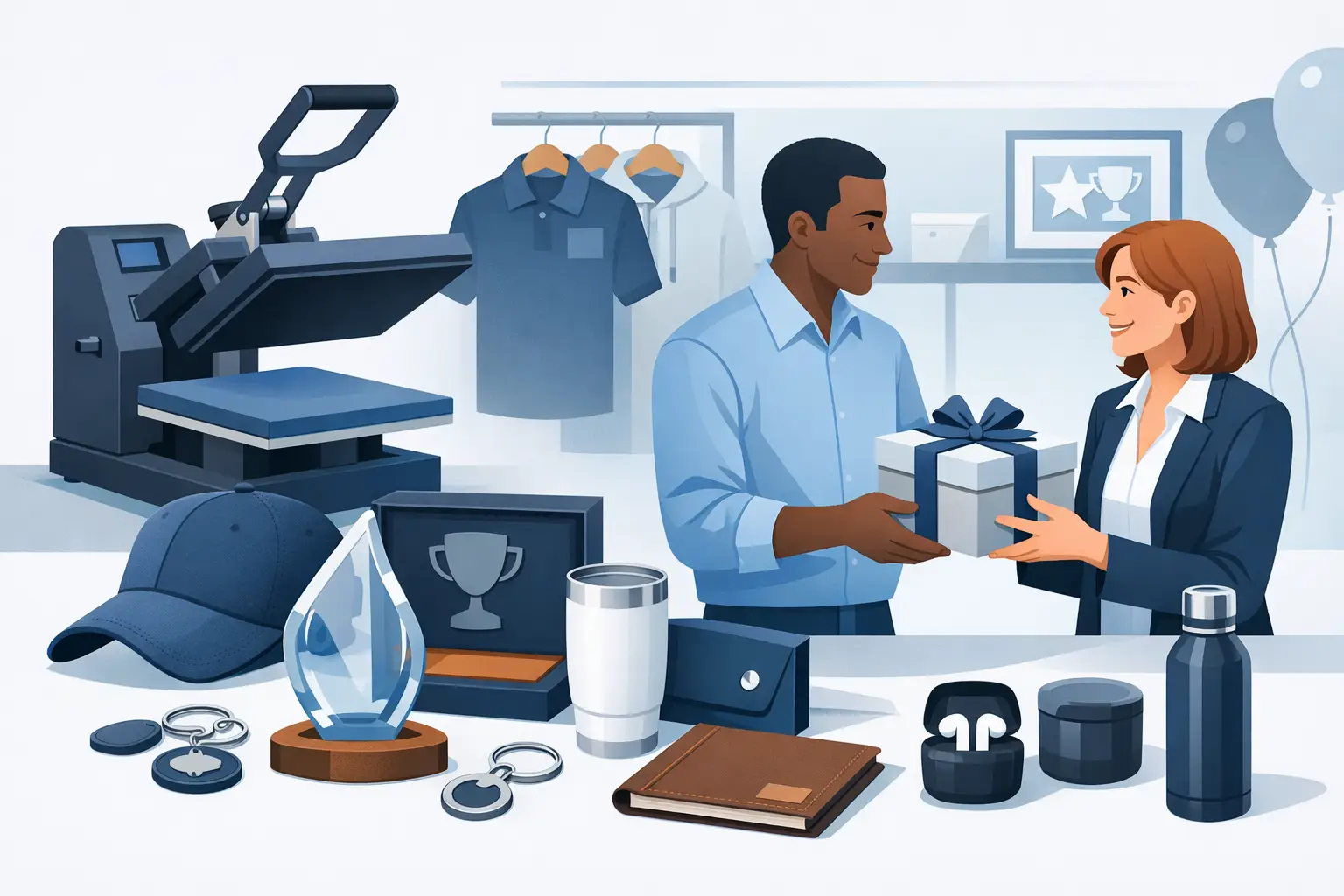
Custom apparel remains one of the strongest options. Quality pullovers, jackets, polos, and hoodies are easy to size, useful in real life, and visible beyond the office. They work especially well for anniversaries, leadership recognition, team milestones, and department awards. The key is choosing pieces employees would actually wear. Fabric quality, fit, and decoration method all matter.
Drinkware is another reliable choice. Tumblers, travel mugs, and insulated bottles have broad appeal and fit a wide range of budgets. They are especially effective for appreciation events, wellness initiatives, and holiday recognition. To keep them from feeling generic, pair them with a thoughtful message, upgraded packaging, or personalization.
Desk and office products can be strong options when the workforce is office-based or hybrid. Notebooks, padfolios, wireless chargers, and tech accessories can feel useful and polished. They work best when the product quality matches the importance of the recognition.
Awards still have a place, especially for years of service, leadership honors, retirement, and major accomplishments. Plaques, acrylic awards, and engraved pieces provide permanence that softer goods sometimes do not. In many organizations, though, they work better when paired with something practical. Employees often appreciate having both a display piece and an item they can use.
Gift kits are also worth considering. A bundled set with branded apparel, drinkware, snacks, and a printed note can create a stronger impression than a single item on its own. This approach works well for onboarding, annual appreciation campaigns, or distributed teams who need a consistent experience across locations.
Custom employee recognition gifts should feel personal, not promotional
This is where branding decisions matter.
An employee gift is not the same as a trade show giveaway. If the organization logo is too large or the item feels more like marketing than appreciation, the message gets diluted. Employees want to feel recognized as people, not used as brand carriers.
That does not mean branding should disappear. It means it should be handled with restraint. A subtle embroidered logo, a tone-on-tone imprint, or a personalized element can make the product feel far more intentional. In many cases, adding the employee’s name, years of service, department, or achievement title creates more impact than increasing logo size.
There is also a practical side to this. Heavily branded gifts can limit how often an employee uses or wears the item. A sleek jacket with understated decoration may become a favorite. A loud promotional piece may stay in a drawer.
When organizations ask us for recognition ideas, one of the first recommendations is to think about wearability and long-term use. If the employee would choose it outside of work, you are usually on the right track.
Match the gift to your workplace culture
Recognition should sound like your organization, not like a copied program from somewhere else.
A construction company, public works department, school athletics program, and corporate office are not going to respond to the same products in the same way. Climate, job role, and work environment all shape what feels useful. In the Kansas City metro, for example, outerwear often makes sense because employees can use it across a wide range of weather conditions. That practical value matters.
Culture matters too. Some teams prefer public recognition with a presentation moment. Others would rather receive a thoughtful item and a personal note from leadership. Neither approach is wrong. The point is alignment.
If your culture is casual and team-oriented, branded hoodies, pullovers, and appreciation kits may fit naturally. If your culture is more formal, premium gifts or engraved awards may carry the right level of professionalism. If employees work in the field, durability may matter more than polish. If they work in a client-facing role, appearance may matter more.
Timing and presentation change the impact
Even a great product can fall flat if the timing is off.
Recognition works best when it feels close to the achievement. Waiting months to acknowledge a milestone weakens the message. Planning ahead helps avoid rushed substitutions, sizing issues, and limited product choices.
Presentation also deserves more attention than it usually gets. A simple printed card with a personal message from a supervisor can elevate the entire experience. Packaging, event setup, and delivery method all shape how employees interpret the gift. This is especially true for anniversaries, retirements, and leadership recognition.
For larger organizations, consistency matters as well. If one department receives polished, personalized gifts and another gets generic leftovers, employees notice the gap. A clear recognition framework keeps the experience fair without making it feel robotic.
Common mistakes to avoid
The most common mistake is choosing based on convenience alone. Fast ordering matters, but speed should not replace relevance.
Another issue is underestimating quality. Employees can tell the difference between a product selected with care and one picked to check a box. That does not mean every gift needs to be expensive. It means the item should feel appropriate for the occasion.
Over-branding is another frequent problem. So is treating every milestone the same. A five-year service award, a holiday thank-you, and a retirement deserve different levels of thought.
Finally, do not separate the product from the message. Recognition is strongest when the gift is part of a larger moment that includes genuine appreciation from leadership or peers.
How to build a recognition program that lasts
The best programs are simple enough to repeat and flexible enough to stay meaningful.
Start by identifying your key recognition moments across the year. Then assign product categories, presentation standards, and timelines to each one. This makes purchasing easier, reduces last-minute scrambling, and creates a more consistent employee experience.
It also helps to work with a partner who can guide product selection, decoration methods, and rollout planning. That matters when you are balancing budgets, multiple departments, varying quantities, and different recognition goals. For many Kansas City area organizations, the real value is not just access to products. It is having someone help narrow the choices and get the details right.
Custom employee recognition gifts work best when they are chosen with the same care you want employees to feel. If the product is useful, the branding is thoughtful, and the message is sincere, recognition stops feeling routine and starts doing what it should – showing people their contribution matters.