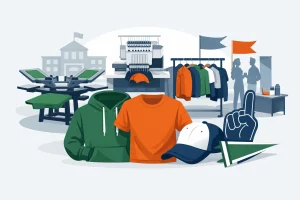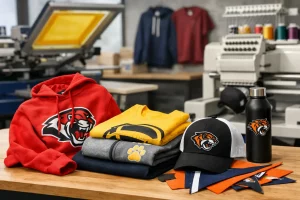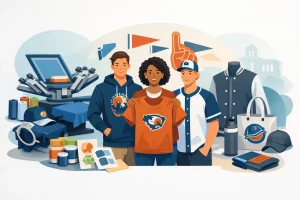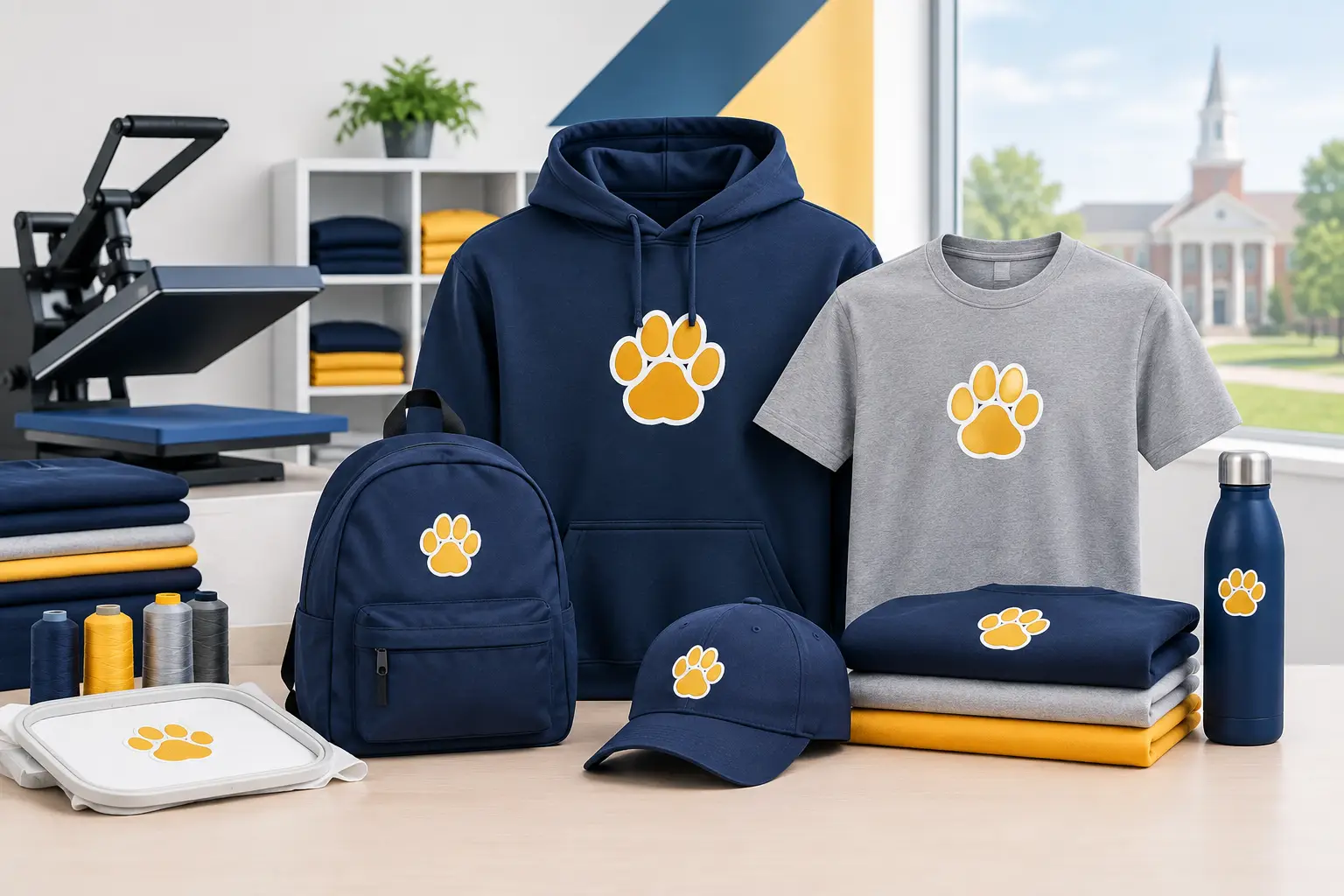
A school apparel program is rarely just about putting a mascot on a T-shirt. It supports school pride, gives staff a polished look, helps athletic programs raise visibility, and gives families a simple way to show up for their students. This school apparel program guide outlines how administrators, booster clubs, coaches, and activity leaders can create a program that is organized, useful, and built to last.
For schools across the Kansas City metro, the biggest challenge is usually not finding apparel. It is managing choices, timelines, approvals, sizes, and expectations without creating more work for already-busy staff and volunteers. A thoughtful plan solves that problem before the first order is placed.
Need Custom Printing or Promotional Products?
Zepher Printing helps Kansas City businesses, schools, teams, and organizations with custom apparel, screen printing, embroidery, promotional products, and branded merchandise.
Request a QuoteStart With the Purpose of Your School Apparel Program
Before choosing garments or decoration methods, decide what the program needs to accomplish. A spirit wear sale for families has different requirements than staff polos, team warmups, or uniforms for student ambassadors. Combining every need into one large order can create confusion and make the assortment harder to manage.
Most school apparel programs serve several audiences: students, parents and alumni, teachers and staff, athletic teams, clubs, and school volunteers. Each group may need a different product mix, but the visual identity should feel connected. A consistent school logo, mascot treatment, and color palette help every item reinforce the same brand.
It also helps to decide whether the program is seasonal, year-round, or event-driven. A fall spirit wear campaign may support football, marching band, and back-to-school activities. Spring orders may center on track, graduation, field days, and summer camps. A year-round approach can work well for larger schools that want staff apparel and fan gear readily available throughout the calendar.
Build a School Apparel Program Guide Before Ordering
A written school apparel program guide does not need to be complicated. It should simply clarify who makes decisions, what designs are approved, which items are available, and how orders will be handled. This keeps a one-time fundraiser from becoming an ongoing series of last-minute questions.
Assign clear roles and approval steps
One person should coordinate communication with the apparel provider, but that person should not have to make every decision alone. Identify who owns artwork approval, budget oversight, garment selection, order collection, and distribution. For a school district, this may include a communications or purchasing contact. For a booster club, it could be a board member and coach working together.
Set approval deadlines early. School logos often need district approval, and athletic teams may have their own requirements for sponsor marks, player names, or competition-specific designs. When approvals happen after an order is built, deadlines can tighten quickly.
Create a practical logo and design system
The best school apparel programs do not rely on a new design for every event. Start with a small group of approved logo options: a primary school logo, a mascot mark, a wordmark, and perhaps a simplified design for small embroidery areas. This gives clubs and teams flexibility while protecting brand consistency.
Consider how each design will reproduce. Fine details that look sharp on a digital flyer may not work on a left-chest embroidered polo. Large, colorful graphics may be ideal for screen-printed T-shirts but unnecessary for a staff quarter-zip. An experienced apparel partner can recommend adjustments that preserve the look while improving readability and durability.
Avoid packing every shirt with too much information. A school name, mascot, year, and event can be effective. Adding multiple slogans, sponsor logos, and detailed graphics can make a design harder to read from a distance and more expensive to produce.
Choose Products for Real School Use
The right garment is the one people will actually wear. A low-cost shirt may make sense for a one-day fun run, while staff uniforms need to remain comfortable and presentable after repeated laundering. Product selection should reflect the use case, expected order quantity, decorating method, and budget.
For broad spirit wear sales, offer a focused selection rather than a catalog-sized list. A short-sleeve T-shirt, long-sleeve T-shirt, hoodie, crewneck, and cap cover many needs without overwhelming families. Include adult and youth sizing whenever possible, and consider one or two premium options for alumni or supporters who want a more polished garment.
Staff apparel usually benefits from a different approach. Polos, quarter-zips, button-downs, outerwear, and embroidered layers create a professional, cohesive appearance for front-office teams, teachers, transportation staff, and event personnel. Color matters here. Darker colors may be more practical for daily wear, while school colors can be used as accents instead of making every garment bright and highly branded.
Athletic programs should plan around the activity. Lightweight performance shirts can suit warm-weather training, while fleece, jackets, and knit caps are useful for Kansas City’s colder games and outdoor events. Ask athletes and coaches what they will wear before selecting products. A garment that stays in a locker does not build team identity or deliver value.
Match Decoration Methods to the Job
Screen printing and embroidery are both excellent options, but they solve different problems. Screen printing is often a strong fit for larger quantities of T-shirts, hoodies, and event apparel, especially when the design is bold and placed prominently on the front or back. It offers vibrant color and works well for spirit wear campaigns.
Embroidery is a natural choice for polos, hats, outerwear, and professional staff apparel. It gives smaller logo placements a textured, durable finish. However, highly detailed artwork may need to be simplified, and large embroidered areas can add weight to the garment.
For programs that need individual names, numbers, or short-run personalization, discuss those needs before finalizing the product plan. Personalization adds value for teams and student leaders, but it also affects production timing and makes returned items more difficult to reissue. Families should understand that personalized apparel typically cannot be exchanged unless there is a production issue.
Plan the Order Timeline Backward
School calendars move fast. Homecoming, tournaments, teacher appreciation weeks, concerts, and graduation all arrive on fixed dates. Waiting until the event is near can limit garment choices and place unnecessary pressure on staff and volunteers.
Work backward from the date apparel is needed. Allow time for design development, internal approvals, collecting orders, production, quality checks, sorting, and distribution. If apparel will be sold through a school store or online campaign, account for the ordering window as well.
A practical timeline also protects families. They are more likely to participate when the ordering process is easy and delivery expectations are clear. State the order deadline, expected delivery timing, available sizes, and whether items will be sent home with students, distributed at an event, or picked up from a designated location.
For recurring events, save what worked. Keep approved artwork, garment details, size breakdowns, and order dates on file. The next football season or school fundraiser will be easier to plan when the team does not have to start from scratch.
Make Distribution Part of the Plan
Distribution is where a well-designed apparel program can either feel organized or become chaotic. Every order should have a clear labeling and sorting process, particularly when there are individual family purchases, multiple school buildings, or personalized items.
For a spirit wear campaign, group orders by student name, teacher, grade level, or pickup location. For staff apparel, sort by department or campus. For athletic programs, organize garments by roster. These small details reduce the time volunteers spend searching through boxes and help prevent missing-item questions after delivery.
It is also smart to order a limited number of extra pieces for common needs, such as a last-minute staff hire, an overlooked coach, or an exchange caused by a sizing error. The amount depends on the program. A small elementary school may need only a few extras, while a large district-wide event may warrant more planning.
Measure What Worked and Improve Next Time
After each campaign, take a few minutes to review participation, best-selling sizes, popular products, and common questions. A hoodie may sell out quickly while a more expensive jacket receives little interest. That does not mean the jacket is a poor product. It may simply belong in a smaller, staff-focused offering rather than the main family spirit wear sale.
Ask whether the assortment was easy to understand, whether deadlines were realistic, and whether the artwork represented the school well. Feedback from families, coaches, and staff is useful when it leads to practical changes, not endless options.
For more than two decades, Zepher Printing has seen that the strongest school apparel programs are not necessarily the ones with the most products. They are the programs with clear decisions, wearable garments, dependable timing, and a look people are proud to represent. Start with one organized campaign, document the process, and let each successful order make the next one easier.