A spirit shirt that stays in the bottom of a drawer does not build much school pride. The pieces people reach for on game day, at weekend events, and around town do more than display a logo – they feel good, fit well, and give supporters a clear reason to wear them. Knowing how to create spirit wear that earns repeat wear starts with treating it as a small brand collection, not just a fundraiser order.
For schools, teams, nonprofits, and community organizations across the Kansas City area, the best spirit wear programs balance identity, budget, timing, and choice. A strong plan makes ordering simpler for organizers and gives families, staff, fans, and volunteers apparel they are proud to own.
Need Custom Printing or Promotional Products?
Zepher Printing helps Kansas City businesses, schools, teams, and organizations with custom apparel, screen printing, embroidery, promotional products, and branded merchandise.
Request a QuoteStart With the Purpose, Not the Product
Before choosing T-shirts or writing a slogan, decide what the collection needs to accomplish. A youth sports program may need affordable shirts that create a unified look for every player and parent. A high school booster club may be raising funds while building excitement before a rivalry game. A nonprofit may want volunteer apparel that is recognizable at a community event but polished enough to wear afterward.
That purpose shapes every later decision. If participation matters most, keep the core items simple and accessible. If the goal is fundraising, include a few higher-value options such as hoodies, quarter-zips, or embroidered caps alongside a dependable T-shirt. If visibility is the priority, choose colors and artwork that can be read from a distance.
It also helps to identify the audience before designing. Elementary school families often respond well to cheerful, straightforward designs and practical youth sizing. Middle school and high school students tend to care more about current fits, softer fabrics, and designs that do not feel overly formal. For an adult alumni group or municipal event, a more understated mark may have broader appeal.
How to Create Spirit Wear Around a Clear Identity
Every collection needs a visual center. That may be a mascot, team name, school initials, event logo, or a short phrase that supporters already recognize. The mistake is trying to put all of those elements on one shirt. Crowded artwork can look impressive on a computer screen but become hard to read once printed on fabric.
Start with one primary design that works across the most popular items. A bold mascot graphic, clean wordmark, or strong monogram often performs better than a detailed illustration with several lines of small text. Build secondary designs only when they serve a purpose, such as a senior-specific shirt, a tournament design, or a staff option.
Color discipline matters just as much. Use the organization’s established colors whenever possible, then select garment colors that let the artwork stand out. Dark ink on a dark shirt can disappear. White ink often works well on navy, black, maroon, and forest green, while darker artwork can pop on heather gray or light-colored garments. If an organization has several official colors, do not feel obligated to use every one in every design. Two or three well-chosen colors usually look more intentional.
For Kansas City-area organizations, consistency is especially useful when apparel appears alongside banners, event signs, business cards, sponsor materials, and social media graphics. Matching the same logo treatment and color direction across those touchpoints makes the organization easier to recognize.
Make the Design Wearable Beyond the Event
A dated event name or oversized sponsor block may be necessary on some items, but it can limit how often people wear the garment later. Consider keeping the front design clean and placing dates, rosters, sponsors, or detailed event information on the back. Another option is to offer one commemorative shirt and one evergreen piece that supporters can wear all year.
Ask a simple question before approving artwork: Would someone wear this to the grocery store, a coffee shop, or a casual Friday at work? If the answer is yes, you are likely creating something with lasting value.
Choose Apparel for Real-World Use
The garment is part of the message. A great design on a stiff, poorly fitting shirt can still disappoint buyers. At the same time, the most premium garment is not always the right answer for a large school order or a community giveaway. The right choice depends on who will wear it, how often, and what the budget needs to support.
For a broad spirit wear launch, a standard cotton or cotton-blend T-shirt is often the foundation. It is familiar, practical, and available in a wide size range. Softer ringspun or triblend shirts can be a worthwhile upgrade for booster club stores, employee spirit days, or adult supporters who expect a more retail-like feel.
Layering pieces tend to extend the life of a collection. Hoodies are dependable for fall sports, outdoor events, and cooler Missouri and Kansas weather. Crewnecks offer a slightly cleaner alternative. Performance shirts work well for camps, running events, and athletic programs, though the print method and artwork may need adjustment for moisture-wicking fabrics.
Do not overlook fit and size planning. Offer youth and adult sizes when families are ordering together, and review sizing charts before opening sales. If you are ordering for a group rather than collecting individual orders, build in a reasonable size mix based on past participation. A shirt that fits well is much more likely to become a favorite.
Match the Decoration Method to the Design
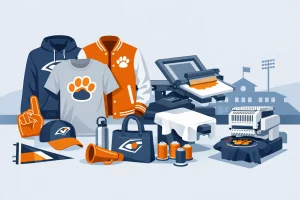
The decoration method should support the artwork, quantity, garment type, and expected use. Screen printing is a strong choice for larger quantities and bold designs with a limited number of ink colors. It provides durable, vivid results and is often the practical choice for team shirts, school events, and fundraising campaigns.
Embroidery gives caps, polos, jackets, and quarter-zips a more dimensional, professional finish. It is particularly effective for staff apparel, coach gear, booster leadership, and spirit wear that needs a polished look. Small details and tiny lettering may need to be simplified so the stitched result remains clear.
For designs with full-color artwork, photographs, or smaller order quantities, a print professional can recommend alternatives that preserve detail without forcing the design into an unsuitable process. The key is to discuss the intended garment early. Artwork that looks excellent on a cotton tee may require a different approach on a slick performance fabric or a thick fleece hoodie.
Request a proof and examine it closely before production. Check spelling, dates, mascot names, sponsor names, garment colors, print placement, and size breakdowns. Those few minutes of review prevent the most common and most expensive spirit wear errors.
Build a Collection Instead of a Single Shirt
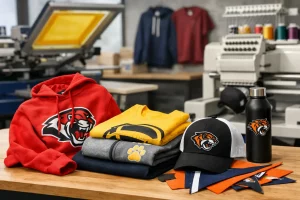
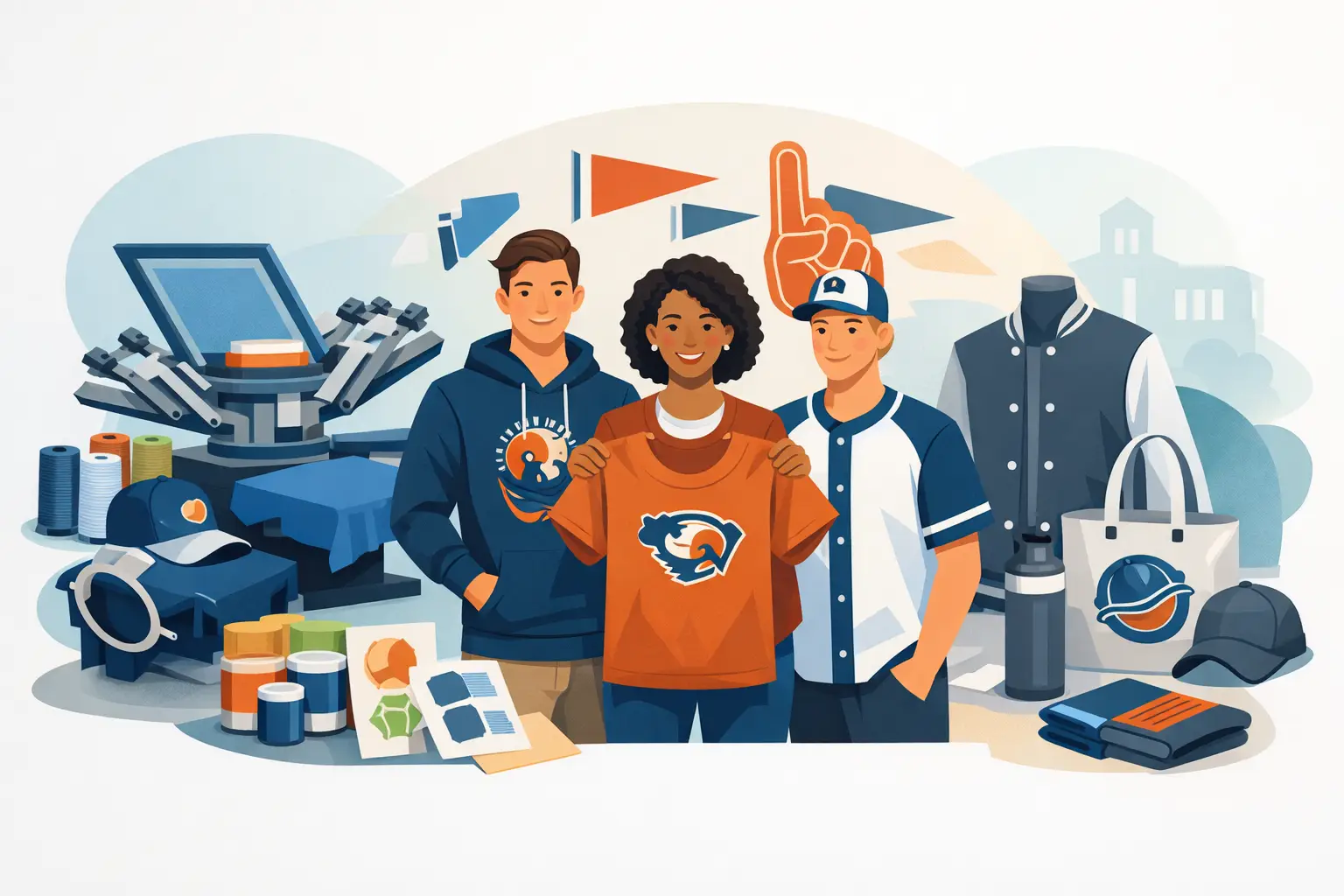
One shirt can work for a one-day event. For an ongoing school, team, or organization, a small collection gives supporters options without making the order difficult to manage. Keep the core assortment focused: a T-shirt, a long-sleeve or hoodie, and one accessory or higher-end item can cover most needs.
Avoid offering too many garment colors, designs, and decoration locations at once. Choice is helpful until it becomes confusing. A limited palette also keeps the collection visually connected and can make inventory, ordering, and communication easier for volunteers and staff.
Think about who may be left out by a single-product approach. Parents may want a subtle hat. Coaches may need embroidered polos. Students may prefer a hoodie, while younger siblings need a low-cost T-shirt. A thoughtful mix welcomes more supporters and can improve participation without overwhelming them.
Plan the Ordering and Rollout Early
Spirit wear is often tied to a deadline: the first game, a homecoming week, a tournament, a fundraising event, or the start of a new school year. Work backward from the date people need the apparel in hand, not the date you would like to begin selling it. Allow time for design approval, size collection, production, sorting, and distribution.
For pre-order campaigns, set a firm order window and communicate it clearly in every announcement. Explain whether items will be shipped, distributed through the school or organization, or available for pickup. If the order is a fundraiser, state where proceeds will support the program. Clear details reduce the number of follow-up questions organizers receive.
A launch needs more than one announcement. Use the channels your audience already watches, whether that is an email newsletter, school communication platform, team app, event registration message, or social media post. Show the design on the actual garment color when possible. People order more confidently when they can picture what they will receive.
For recurring programs, keep notes after each campaign. Which sizes sold first? Did families request more youth options? Was a hoodie more popular than expected? Did an event date create an avoidable deadline crunch? That feedback turns the next order into a faster, more reliable process.
Use a Partner Who Can See the Whole Project
Spirit wear has many moving parts, especially when volunteers, coaches, administrators, and sponsors all need a say. An experienced local print partner can help narrow garment choices, prepare artwork for production, recommend decoration methods, and coordinate related needs such as banners, event signage, sponsor materials, or staff apparel.
At Zepher Printing, we have seen that the smoothest projects begin with a clear goal and a realistic timeline. A quick conversation about audience, budget range, design direction, quantities, and delivery date usually prevents the avoidable issues that slow down orders later.
The best spirit wear does not need to be complicated. Give people a comfortable garment, a design they recognize immediately, and a reason to wear it long after the event is over. That is how a shirt becomes a visible part of your organization’s community.