A polo shirt can do a lot of work for a brand. It shows up at trade shows, front desks, job sites, school events, golf outings, volunteer days, and everyday customer interactions. But when it is time to choose decoration, the question comes up fast: embroidered polos vs printed polos – which one actually makes more sense for your team?
The right answer depends on how the shirts will be worn, what your logo looks like, how often they will be washed, and what kind of impression you want to make. After years of helping organizations across the Kansas City area choose branded apparel that holds up and looks right, we have seen one simple truth: the best option is not always the fanciest one. It is the one that matches the job.
Need Custom Printing or Promotional Products?
Zepher Printing helps Kansas City businesses, schools, teams, and organizations with custom apparel, screen printing, embroidery, promotional products, and branded merchandise.
Request a QuoteEmbroidered polos vs printed polos: the real difference
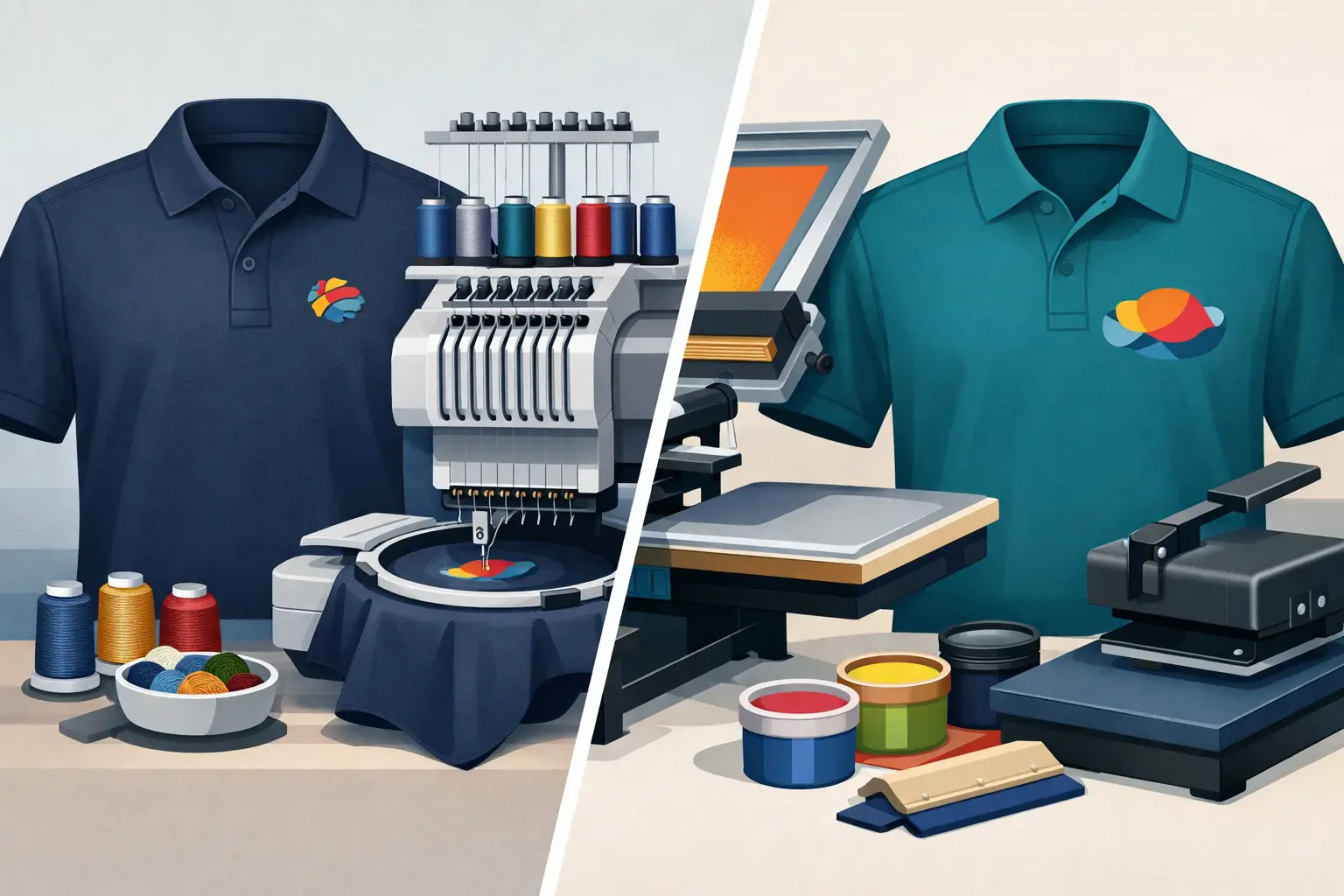
Embroidery uses thread stitched directly into the fabric. That gives the logo texture, dimension, and a more polished appearance. It is often the go-to choice for employee uniforms, office apparel, hospitality teams, municipal departments, and organizations that want a more established, professional look.
Printing applies ink or transfer material to the shirt surface. Depending on the method, it can produce crisp detail, smooth color transitions, and larger graphics that embroidery cannot handle as cleanly. Printed polos are often a smart choice for event staff, school groups, promotional campaigns, seasonal teams, and situations where budget or artwork complexity matters more than texture.
Neither method is better across the board. They simply perform differently.
When embroidery makes the stronger impression
If your staff wears polos in customer-facing settings, embroidery usually feels like the more premium option. A stitched logo on the left chest tends to look clean, durable, and professional without trying too hard. For banks, contractors, property managers, medical offices, country clubs, municipal teams, and front-office staff, that matters.
Embroidery also holds up well over time. Repeated washing generally does not cause the design to fade the way some print applications can if the garment is heavily used or not cared for properly. For uniforms worn every week, that durability can make embroidery the more practical choice, not just the more attractive one.
There is also a perception factor. People often associate embroidery with permanent uniforms and established brands. If you are outfitting a leadership team, sales team, or anyone representing your organization in meetings and public settings, embroidery usually supports that image better than print.
That said, embroidery does have limits. Very small text can become hard to read. Fine lines may fill in. Complex logos with gradients or intricate details often need to be simplified before stitching. On some lightweight performance polos, dense embroidery can also add stiffness or cause slight puckering if the design is too large.
When printed polos are the better fit
Printed polos work especially well when the design needs more detail or more color flexibility. If your logo includes gradients, thin outlines, small lettering, or a more modern graphic style, print can often reproduce it more accurately than thread.
They are also useful when you want a softer, lighter decoration. On moisture-wicking performance polos, certain print methods can keep the shirt feeling smoother and less structured than embroidery. For teams working outdoors, moving constantly, or wearing the shirt in heat, comfort can become a real deciding factor.
Printed polos also make sense for shorter-term use. Think event crews, fundraisers, tournament volunteers, recruiting fairs, school clubs, community campaigns, or seasonal staffing. In those cases, you may not need the longevity or elevated look of embroidery. You need shirts that look sharp, fit the budget, and clearly display the brand.
Another advantage is design size and placement. Printing gives you more freedom if you want a larger logo, back print, sleeve graphic, sponsor marks, or messaging beyond a simple chest logo. Embroidery shines in smaller placements. Printing gives you more room to communicate.
Logo design matters more than most buyers expect
A lot of decoration decisions are really logo decisions in disguise.
If your logo is simple, bold, and clean, embroidery often looks excellent. A straightforward mark with solid shapes and limited colors translates well into thread. This is one reason many corporate logos work so well on polos.
If your logo includes fine detail, tonal shifts, distressed effects, or tight typography, print may deliver a cleaner result. Trying to force a complicated logo into embroidery can lead to compromises that weaken the brand instead of improving it.
This is where experienced guidance saves time. A good apparel partner will not just ask what method you want. They will look at the artwork, the garment, the use case, and the quantity, then recommend what will actually look best in real life.
Think about the wearer, not just the logo
One of the most common mistakes in apparel buying is choosing decoration based only on appearance in a mockup. The better question is how the shirt will function once it leaves the box.
For example, a polo for an office manager greeting visitors has a different job than a polo for a parks crew, concession team, or school fundraiser volunteer. The office manager may benefit from the polish of embroidery. The event volunteer may need a more visible logo, a larger design, or a lower-cost option that works for a one-day event.
In the Kansas City metro, weather can also influence the decision. If polos will be worn through hot summers at outdoor events, comfort and breathability matter. If they will be layered under quarter-zips or jackets for much of the year, a compact embroidered chest logo may be all you need.
Budget is part of the conversation, but not the whole thing
Buyers often assume print is always cheaper and embroidery is always more expensive. Sometimes that is true, but it is not universal.
The final cost depends on logo size, stitch count, number of colors, setup requirements, garment type, quantity, and placement. A small embroidered chest logo on a standard polo may be a smart long-term value for a uniform program. A printed design may be more efficient for larger artwork or temporary use. The right comparison is not decoration cost alone. It is total value over the life of the shirt.
If the polo will be worn for a year or more as part of a regular uniform rotation, embroidery often justifies itself. If the shirt supports a specific campaign, event, or seasonal need, print can be the more efficient choice.
Which option is better for different organizations?
For businesses, embroidered polos are often the strongest fit for employee uniforms, client-facing teams, and sales staff. They communicate consistency and professionalism with very little effort.
For schools and booster groups, it depends on the audience. Staff polos often look best embroidered, while printed polos can make more sense for clubs, events, parent volunteers, and spirit wear programs.
For nonprofits, printed polos are often useful when outfitting volunteers or event teams at scale, especially when clear visibility matters. Embroidered polos can still be the right choice for leadership, board events, or donor-facing apparel.
For municipalities and community organizations, embroidery is often preferred for department identity and long-term wear, while print works well for public events, rec programs, and seasonal staff.
How to make the right call faster
If you are stuck between the two, start with four practical questions. Who is wearing the polos? How often will they be worn and washed? What does the logo actually look like? And what impression should the shirt create?
If the answer points toward professionalism, longevity, and a classic uniform look, embroidery is usually the better route. If it points toward graphic flexibility, event use, comfort, or broader branding space, print may be the smarter choice.
Sometimes the best answer is not either-or. Many organizations use both. They choose embroidered polos for managers, sales teams, or permanent staff, and printed polos for promotions, volunteers, and short-term programs. That approach keeps the brand consistent while matching the apparel to the job.
At Zepher Printing, that is often where the conversation lands. The goal is not to push one decoration method. It is to help customers choose apparel that feels right, looks right, and performs well once real people start wearing it.
A good polo should not create second guesses after delivery. It should make your team look prepared, your brand look consistent, and your ordering decision feel easy. If you start there, the embroidery versus print question gets a lot clearer.