A handwritten note on branded letterhead still carries weight. So does a polished envelope, a clean business card, or a professionally printed presentation folder handed across a conference table. Custom business stationery printing may seem like a small part of your brand, but it often shows up at the exact moments when people decide whether your organization feels credible, organized, and worth remembering.
For businesses, schools, nonprofits, and public organizations, stationery is not just office supply inventory. It is a working brand asset. It supports sales conversations, donor outreach, recruiting, onboarding, event planning, vendor communication, and everyday operations. When it is done well, it quietly reinforces professionalism. When it is inconsistent, outdated, or low quality, people notice that too.
Need Custom Printing or Promotional Products?
Zepher Printing helps Kansas City businesses, schools, teams, and organizations with custom apparel, screen printing, embroidery, promotional products, and branded merchandise.
Request a QuoteWhy custom business stationery printing still matters
A lot of communication happens digitally, but printed materials still carry a level of permanence and intention that email cannot match. A proposal packet feels more established when it includes coordinated letterhead, envelopes, and inserts. A school administrator sending formal correspondence benefits from materials that look official and consistent. A nonprofit mailing campaign often performs better when every printed component feels intentional.
That is why custom business stationery printing remains relevant across industries. It helps organizations control how they are perceived in moments that matter. The effect is practical, not flashy. Clear branding, readable typography, quality paper, and consistent color all work together to create trust.
In the Kansas City area, we often see this matter most for organizations that interact with the public regularly. That includes local businesses meeting clients, municipalities sending notices, nonprofits managing donor relationships, and schools communicating with families and community partners. In each case, stationery supports the message before the message is even read.
What counts as business stationery today
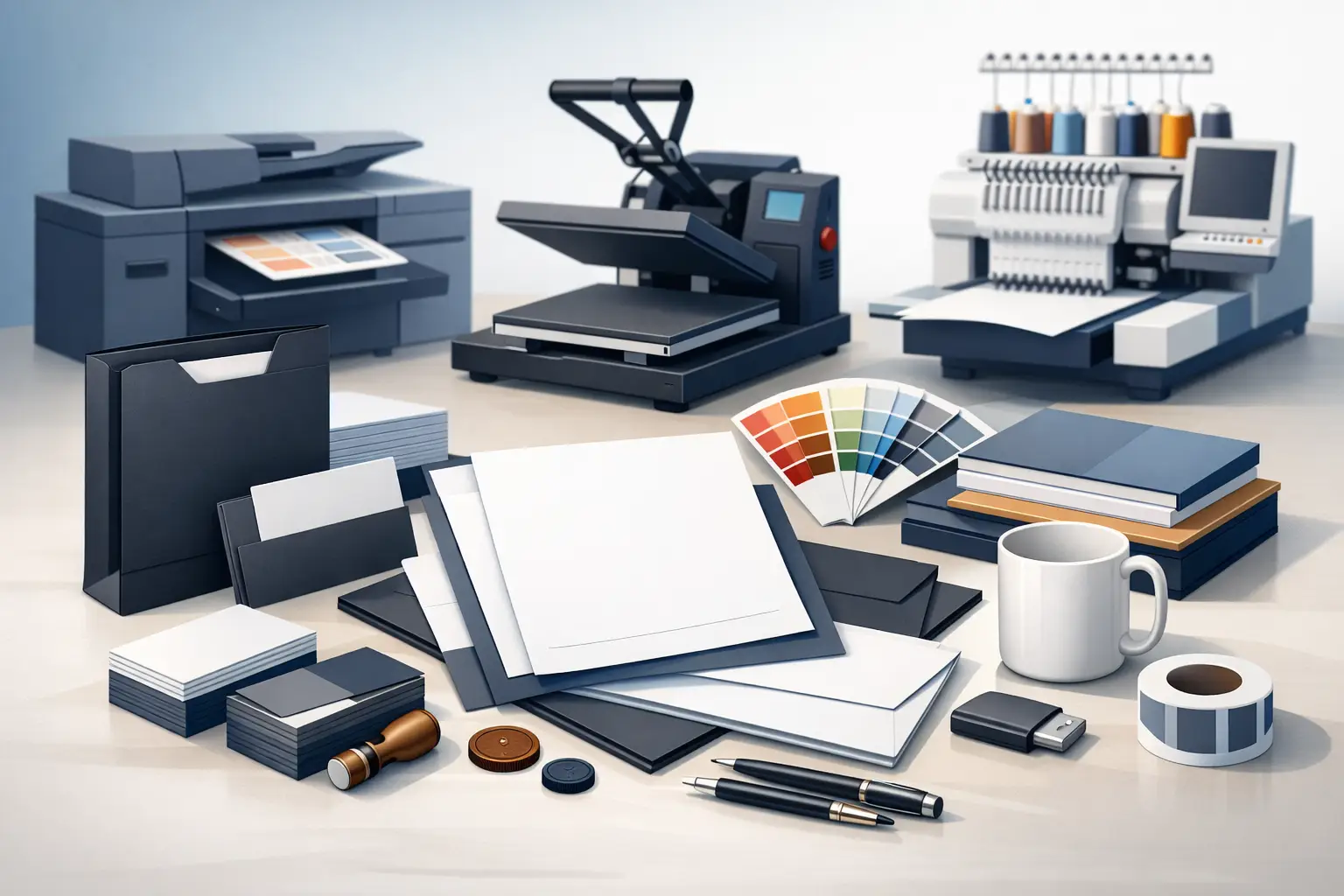
Many buyers think of stationery as letterhead and envelopes, and those are still core pieces. But most organizations need a broader set of materials. Business cards, note cards, presentation folders, mailing envelopes, forms, and branded inserts often belong in the same conversation.
The right mix depends on how your team works. A professional services firm may need polished correspondence packages and leave-behind folders. A school district may need administrative letterhead, department-specific envelopes, and printed forms. A nonprofit planning events may need donor acknowledgment cards, sponsorship packets, and printed inserts that match campaign branding.
This is where a one-size-fits-all approach usually falls short. Good stationery systems are built around actual use, not just a standard checklist.
The real value is consistency
The biggest mistake organizations make is treating stationery as a series of separate print orders. Someone orders business cards from one source, envelopes from another, and letterhead gets updated later with a slightly different logo file or color. Over time, the brand starts to drift.
Consistency matters because it reduces friction. Your staff does not have to guess which version of the logo is current. Your materials look coordinated across departments. New hires receive the right items without piecing them together from old files and outdated templates.
That consistency becomes especially important for organizations with multiple teams, locations, or approval layers. A municipality, school, or growing company may have several people ordering printed materials at different times. Without a clear system, quality and brand standards become hard to maintain.
How to choose the right stationery pieces
Start with function. Before talking paper stocks or finishes, identify where and how each item will be used. A business card for a field sales rep may need different priorities than a card for a senior administrator. A donor acknowledgment note may call for a warmer, more personal feel than standard office letterhead.
Think about volume too. Some items are everyday essentials and need to be practical, easy to reorder, and cost-conscious. Others are used for key meetings, formal communications, or special events, where presentation matters more. There is a trade-off here. Premium stocks and specialty finishes can elevate your materials, but they are not necessary for every piece.
It also helps to think in sets. If your team regularly sends proposals, welcome packets, sponsorship materials, or board communications, build stationery around those workflows. That usually leads to smarter purchasing decisions than ordering individual items in isolation.
Design choices that affect results
Stationery design works best when it is restrained. Clean layouts, strong hierarchy, and brand consistency matter more than visual extras. If a page feels crowded, overly decorative, or hard to read, it is not doing its job.
Logo placement should be consistent. Contact information should be current and easy to scan. Fonts should match your broader brand identity and remain readable across different formats. Color should be managed carefully, especially if you want the same branded look across cards, envelopes, folders, and forms.
Paper choice also changes perception. Heavier stocks tend to feel more established and durable. Uncoated papers can create a more traditional, writable surface for letterhead and note cards. Smoother or coated finishes may work better for presentation pieces, depending on the design. There is no single best option. It depends on whether the piece is meant to be mailed, signed, stored, handed out, or used internally.
Common problems that slow projects down
Most stationery delays happen before printing starts. Missing logo files, outdated contact details, unclear quantities, and last-minute design changes are common issues. Another frequent problem is ordering without thinking ahead. A team prints letterhead, then realizes they also need matching envelopes and pocket folders for the same rollout.
Approval bottlenecks can also cause trouble, especially in schools, municipalities, and larger organizations. If multiple stakeholders need to sign off on branding, department names, titles, or mailing information, build time for that early.
The easiest way to avoid these issues is to treat stationery as a coordinated project, even if the order itself is straightforward. Finalize your brand elements, review contact details carefully, and think through the full set of materials before production begins.
When custom business stationery printing supports growth
Stationery becomes more valuable when an organization is changing. A rebrand, new leadership team, office move, expanded services, or hiring push all create moments when printed materials need to catch up quickly.
For example, a growing company may need updated business cards for new team members, refreshed letterhead for formal client communication, and presentation folders for sales meetings. A nonprofit preparing for a fundraising campaign may need donor correspondence materials that feel polished and aligned with the campaign identity. A school or athletic program may need printed materials that reflect a more unified brand across departments and events.
These are not cosmetic changes. They help organizations present themselves clearly during periods when first impressions matter more than usual.
Why local coordination makes a difference
Stationery sounds simple until you are juggling brand standards, deadlines, multiple departments, and a launch date that cannot move. That is where working with an experienced local print partner helps. Faster communication, easier proofing, and practical guidance can save a lot of time compared with treating each order like a standalone transaction.
For organizations across Overland Park, Johnson County, and the wider Kansas City metro, local support often matters most when timelines are tight or projects involve more than one category. If you are updating stationery alongside signage, event materials, apparel, or promotional products, coordinated execution becomes a real advantage.
That broader view is part of what makes the process easier. Instead of asking only what needs to be printed, the better question is how all your branded materials should work together.
Building a stationery system that lasts
The best stationery programs are easy to manage after the first order. That means using approved artwork, standardizing layouts where possible, and creating repeatable formats for cards, letterhead, envelopes, and related pieces. It also means planning for staff changes, department updates, and reorders so you are not restarting the process every time something changes.
For some organizations, that may mean keeping a simple core set of materials on hand. For others, it may involve multiple versions by department, campaign, or office location. Either way, the goal is the same: make ordering easier while protecting quality and consistency.
After more than two decades of supporting organizations across the Kansas City area, Zepher Printing has seen that the most effective stationery is rarely the most complicated. It is the set that fits the way your team actually works, reflects your brand accurately, and arrives fast, local, and done right.
If your current materials feel mismatched, outdated, or harder to manage than they should be, that is usually a sign it is time to rethink the system. Good stationery does not need to be flashy to make an impression. It just needs to make your organization look prepared every time it leaves your hands.